The Essentials of Logo Creation
Creating a logo is a pivotal task for any designer. The logo serves as the visual cornerstone of a brand’s identity, and mastering this art requires a blend of creativity, research, and meticulous execution. In this article, we’ll delve into the core elements that make an outstanding logo and share professional tips to help you succeed.
Creating a logo is an art that blends creativity with strategy, making it essential for brand identity. In this guide, we will explore practical tips and sources of inspiration to help you master logo design. For a polished presentation, find unique box mockups here that enhance your logo’s visual appeal.
Logos are more than just symbols; they are the face of a brand. As such, a logo must communicate the brand’s values, purpose, and story in a simple yet impactful manner. This requires a designer to possess a deep understanding of the brand and its target audience. A well-designed logo can instill trust and loyalty, acting as a silent ambassador for your brand. It needs to be instantly recognizable, differentiating your business in a crowded marketplace. Let’s explore what makes logos effective and truly unforgettable.
Understanding Your Brand and Audience
The first step in logo creation is thorough research. To design a logo that resonates, you must understand the brand’s personality, mission, and vision. Consider the following questions to guide your understanding:
- What message does the brand want to convey?
- Who is the target audience?
- How does this branding stand out from competitors?
This knowledge will guide every decision, from the choice of color to the style of typography. For example, a company targeting young adults may favor vibrant, bold colors, while a company aiming at professionals might lean towards more subdued, classic tones. The key is to align the logo’s style with the emotional tone the brand aims to evoke.
Additionally, conducting surveys or focus groups with the target audience can yield valuable insights, ensuring the logo resonates well with potential customers.
Key Elements of Successful Logos
Creating a successful logo involves several key elements that work together to form a lasting and distinct brand identity:
- Simplicity: A simple logo is easily recognizable and versatile across various mediums. Overly complex logos can be hard to reproduce and might not be as adaptable for various branding materials.
- Memorability: Aim for a design that leaves a lasting impression. Consider how people will remember the logo after only a quick glance.
- Timelessness: Avoid trends that may quickly become outdated and focus on creating a classic look. Great logos stand the test of time and do not rely on the latest design trends, which can date quickly.
- Versatility: Ensure your logo looks good in different sizes and applications, from digital platforms to physical printing. Test it in various formats to see it maintains its impact.
- Relevance: Your logo should be appropriate for the intended purpose and audience. It should not only be fitting in the sector but should also embody the values of the business.
It’s also critical to test your logo in various sizes to ensure it’s clear and effective at both large and small scales. A versatile logo looks great on a business card as well as on a billboard. This ensures your brand identity remains strong across all channels.
Inspiration and Ideation Process
Inspiration can come from anywhere, but targeted research can spark creative ideas. Consider exploring existing logos, art movements, fashion, and architecture. Sometimes, a breakthrough can come from unrelated fields. For instance, elements of nature, historical motifs, or technological advancements might inspire fresh, inventive designs.
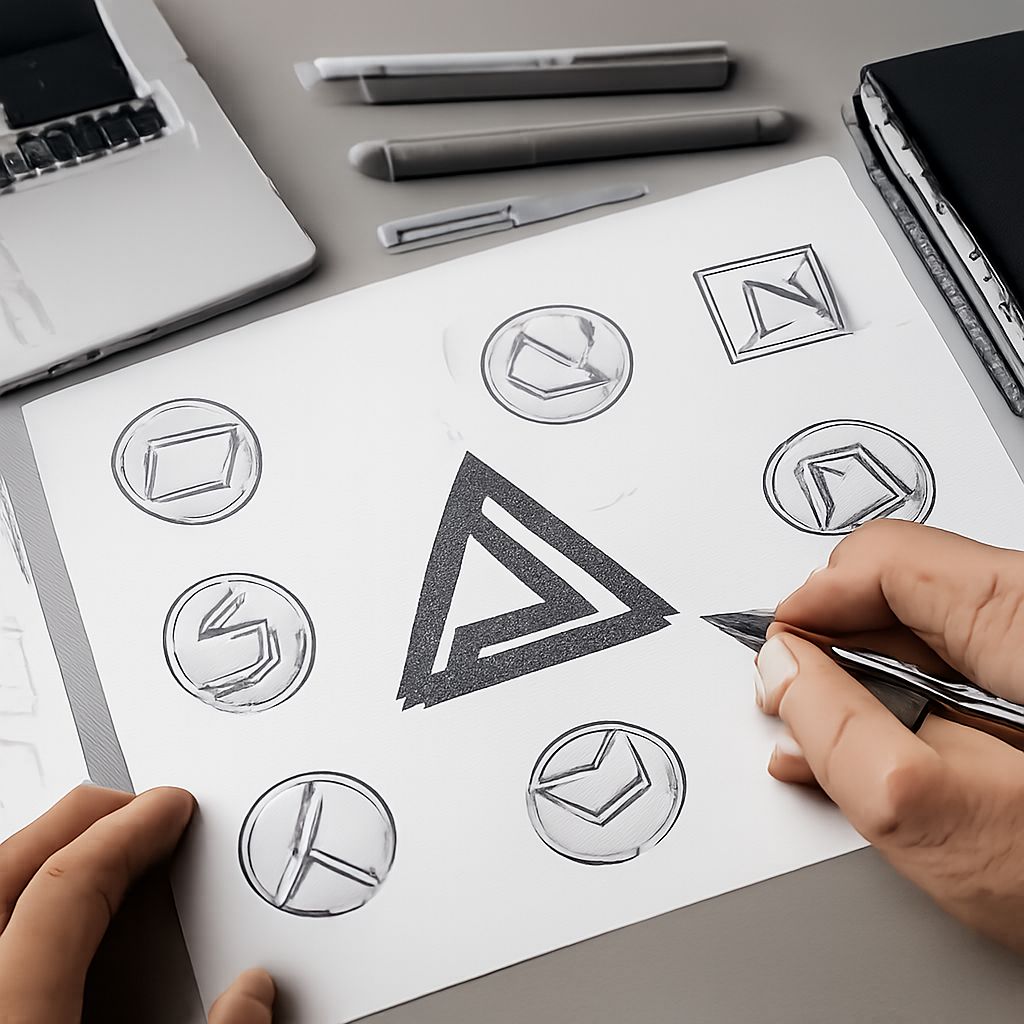
Sketch out ideas without restraint. Experiment with different concepts and styles—often the best ideas evolve from initial sketches rather than digital perfection. During this stage, brainstorm freely with multiple iterations, focusing on varying shapes, color schemes, and typographic solutions. Once a few concepts are refined, seek constructive feedback to further hone your design. Gathering feedback is crucial; insights from others can offer new perspectives and highlight overlooked aspects.
Consider using mood boards or concept boards during the ideation phase. These visual tools can help organize ideas and create a cohesive visual language for the brand.
Bringing the Logo to Life
Once you’ve settled on your design, it’s time to refine and digitize your logo. This stage involves meticulous attention to detail, ensuring precision in alignment, spacing, and proportions. Utilize design software such as Adobe Illustrator to recreate your concepts with precision and scalability in mind.
Create multiple variations of your logo for different applications, including monochrome versions and simplified forms. Ensuring the logo is adaptable means considering its appearance in various scenarios—mobile devices, promotional products, social media profiles, etc.
Ultimately, your logo should work in harmony with the overall brand identity, aligning with other visual elements like business cards, websites, and promotional materials.
FAQ
What are the key considerations when choosing colors for a logo?
Colors in logo design are incredibly influential. They evoke emotions and communicate different messages. For example, blue often represents trust and professionalism, while red can denote passion and energy. Always consider how colors align with the brand identity and how they appear in both print and digital formats. Additionally, ensure the color scheme maintains good contrast and remains legible in black and white formats. Testing your color choices in various media beforehand can help prevent any unforeseen issues with color consistency.
How do you ensure a logo is adaptable for different uses?
Designing a responsive logo that functions well across various platforms is crucial. Create versions in different formats, such as vector for scalability, and consider how it looks in black and white, on both light and dark backgrounds. This can involve creating several variants of the logo – horizontal, vertical, emblematic – to suit different placements and needs. Moreover, ensure that your brand guidelines detail how to properly use the logo to maintain consistency across all applications.
How important is typography in a logo?
Typography is integral to logo design. It should complement the visual element and reflect the brand’s tone. Opt for legible fonts that maintain clarity at different sizes and are not overly stylized, which might hinder readability. Typographic logos or wordmarks often become iconic by themselves, think Google or Coca-Cola, thanks to their distinctive font choices and treatments. Therefore, selecting or even customizing a typeface that resonates with your brand’s message is a crucial step in the design process.
Can you redesign a logo without losing brand recognition?
Yes, but it needs to be done carefully. Ensure key elements that convey the brand identity remain. Often, updates involve modernizing the font or streamlining the design while retaining familiar aspects that customers associate with the brand. Redesigns should aim to enhance brand appeal and relevancy while preserving the essence and recognition-value of the original logo. Communicating the reasons and benefits of a redesign to stakeholders and the public can also aid in smooth transitions.
Case Studies: Learning from the Best
Examining successful logo design case studies can provide invaluable insights and inspiration. Consider studying renowned brands that have evolved their logos over time, such as Apple, Mercedes-Benz, or Nike. Each of these brands showcases how impactful logos can be, maintaining relevance and consistency despite changing trends and markets.
These case studies often reveal how redesigns were implemented with a strategic vision, grounded in comprehensive market research and customer feedback, while emphasizing their core brand identity. By analyzing such examples, designers can learn how to skillfully balance evolution and innovation in logo design.
In conclusion, mastering the art of logo creation is both an exciting and challenging process. It requires a mix of creative flair and analytical thinking, rooted in a deep understanding of brand identity. By adhering to the principles of effective logo design, staying open to inspiration, and continually refining their craft, designers can create logos that not only stand the test of time but also become integral parts of the brands they represent.