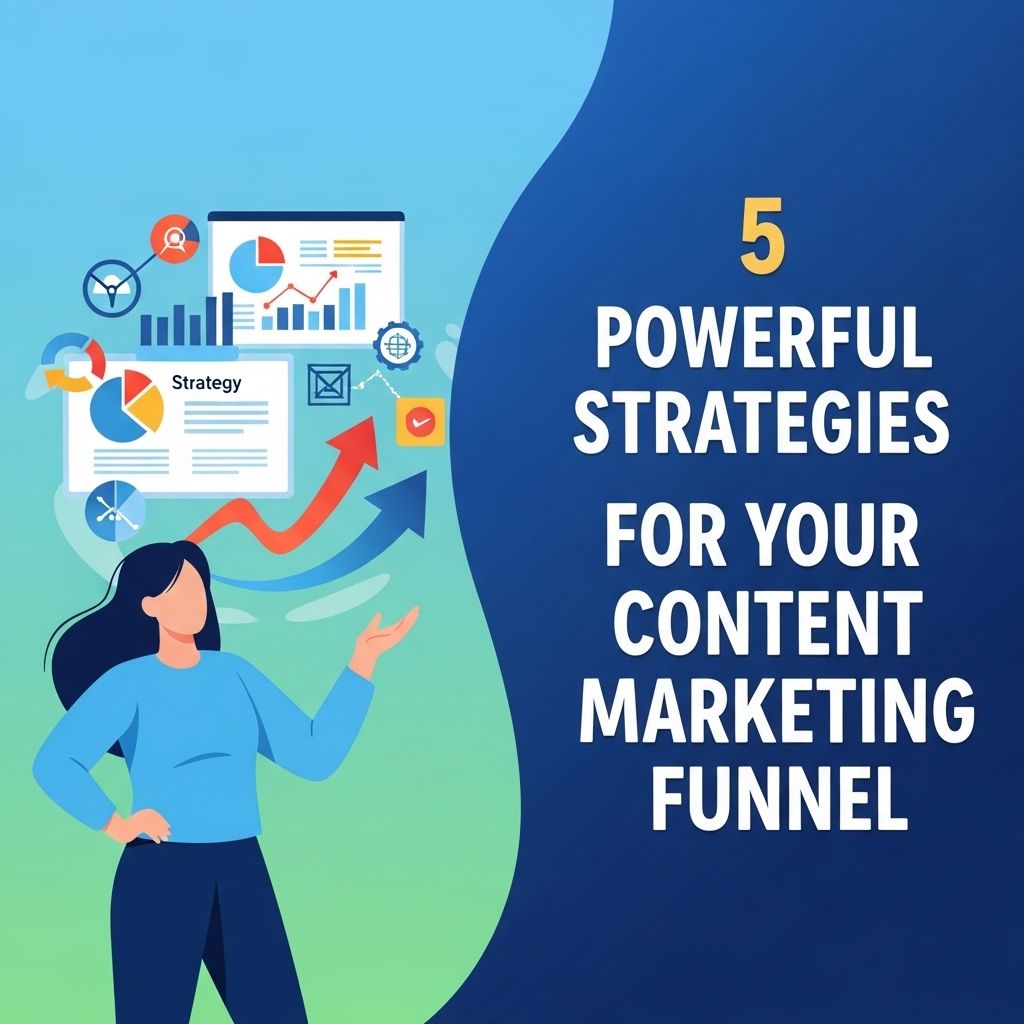
In the ever-evolving landscape of digital marketing, a well-defined content marketing funnel is paramount for businesses aiming to engage and convert their audience. A content marketing funnel guides potential customers through their journey, from initial awareness to final purchase and beyond. This article explores five powerful strategies that can enhance your content marketing funnel, ensuring it effectively captures and nurtures leads.
Creating a successful content marketing funnel is essential for guiding potential customers through their journey. In this article, we’ll explore five powerful strategies that can enhance your approach and effectiveness. For more insights, discover helpful tips.
Understanding the Content Marketing Funnel
Before delving into strategies, it is essential to understand the concept of a content marketing funnel. Typically divided into three main stages—awareness, consideration, and decision—each stage requires tailored content to address the specific needs and questions of the target audience.
The Three Stages of the Funnel
- Awareness: At this stage, potential customers become aware of a problem they need to solve. Content should focus on educating them about their issues.
- Consideration: Once they identify a problem, they consider various solutions. Content should compare options and highlight benefits.
- Decision: Finally, potential customers are ready to make a decision. Content should focus on providing compelling reasons to choose your brand over competitors.
1. Create Targeted Content for Each Stage
One of the most effective strategies is to develop targeted content that aligns with the specific stage of the customer journey. This ensures that the content resonates with the audience and meets their expectations.
Types of Content by Funnel Stage
| Funnel Stage | Content Type |
|---|---|
| Awareness | Blog posts, Infographics, Social media content |
| Consideration | Case studies, Ebooks, Webinars |
| Decision | Product demos, Testimonials, Comparison guides |
2. Optimize for SEO
Search Engine Optimization (SEO) plays a crucial role in driving organic traffic to your content. By optimizing your content for relevant keywords, you increase your chances of appearing in search results, thereby attracting potential customers at the awareness stage.
SEO Best Practices
- Keyword Research: Use tools like Google Keyword Planner or SEMrush to find relevant keywords.
- On-Page SEO: Optimize titles, headers, and meta descriptions with targeted keywords.
- Content Quality: Create high-quality, informative content that answers users’ queries.
- Link Building: Earn backlinks from reputable sites to enhance your domain authority.
3. Utilize Lead Magnets
Lead magnets are incentives that encourage visitors to provide their contact information, nurturing them through the content funnel. These can be invaluable in converting leads and providing ongoing engagement.
Examples of Effective Lead Magnets
- Ebooks: In-depth guides that provide comprehensive information.
- Webinars: Live or recorded sessions on relevant topics.
- Free Trials: Allowing potential customers to experience the product before buying.
- Quizzes: Interactive content that provides personalized results.
4. Personalize Your Content
Personalization is key to engaging users and driving conversions. By tailoring content to individual preferences and behaviors, you can create a more meaningful experience for your audience.
Techniques for Personalization
- Segment Your Audience: Divide your audience based on demographics, interests, and behaviors to deliver relevant content.
- Use Data Analytics: Leverage analytics tools to understand user behavior and preferences.
- Dynamic Content: Implement tools that allow content to change based on user interactions.
5. Measure and Optimize Your Funnel
Finally, measuring the effectiveness of your content marketing funnel is vital to continuous improvement. Use analytics tools to track user engagement, conversions, and drop-off points within the funnel.
Key Metrics to Monitor
- Traffic Sources: Understand where your traffic is coming from.
- Conversion Rates: Measure the percentage of users taking desired actions.
- Bounce Rates: Identify how many visitors leave your site without interacting.
- Lead Quality: Assess the quality of leads generated through the funnel.
By regularly measuring these metrics, you can identify areas for improvement and optimize your content marketing strategies accordingly.
Conclusion
Implementing these five powerful strategies can significantly enhance your content marketing funnel. By creating targeted content, optimizing for SEO, utilizing lead magnets, personalizing the user experience, and measuring effectiveness, you can guide potential customers through their journey more effectively. As the digital landscape continues to evolve, staying adaptable and responsive to your audience’s needs will ensure the success of your content marketing efforts.
FAQ
What is a content marketing funnel?
A content marketing funnel is a strategic approach that outlines the journey potential customers take from awareness to conversion, using various types of content to guide them through each stage.
How can I create engaging content for my marketing funnel?
To create engaging content, focus on understanding your audience’s needs, use storytelling techniques, incorporate visuals, and ensure your content provides value at every stage of the funnel.
What are the stages of a content marketing funnel?
The main stages of a content marketing funnel are awareness, consideration, conversion, and retention, each requiring different types of content to effectively engage the audience.
How do I measure the success of my content marketing funnel?
You can measure the success of your content marketing funnel by tracking key performance indicators (KPIs) such as traffic, engagement rates, conversion rates, and customer retention rates.
What role does SEO play in a content marketing funnel?
SEO plays a crucial role in a content marketing funnel by improving visibility in search engines, attracting organic traffic, and ensuring that your content reaches the right audience at the right time.
Can social media enhance my content marketing funnel?
Yes, social media can enhance your content marketing funnel by increasing brand awareness, driving traffic to your content, and facilitating engagement with your audience throughout their buyer journey.