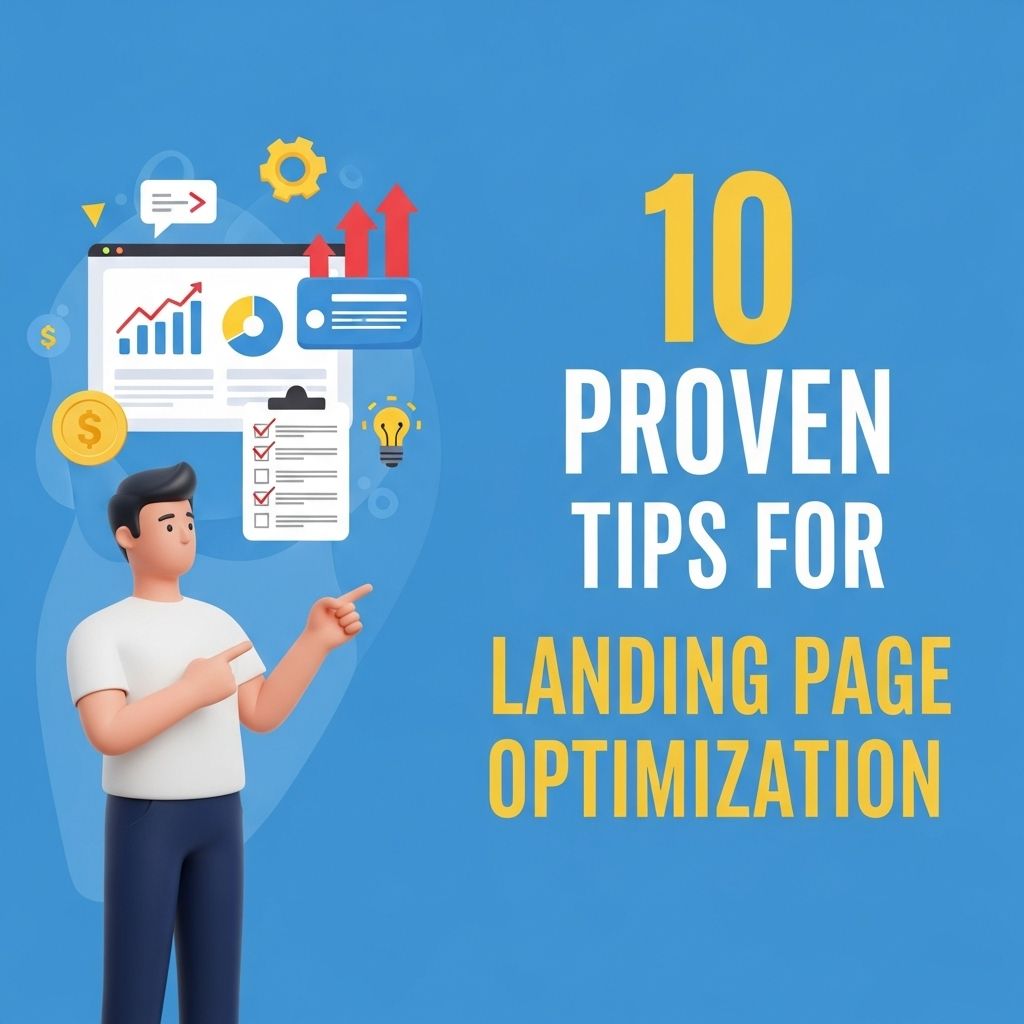
In the world of digital marketing, landing pages serve as the frontline soldiers in the battle for conversions. These single web pages play a pivotal role in persuading visitors to take action, whether it’s signing up for a newsletter, downloading a resource, or making a purchase. As competition intensifies and consumer attention spans dwindle, optimizing your landing page is no longer a luxury—it’s a necessity. This article delves into ten proven tips that can significantly enhance landing page performance.
Creating an effective landing page is crucial for converting visitors into customers. This guide presents 10 proven tips for landing page optimization that can significantly enhance user experience and boost conversion rates. For additional inspiration on website layouts, check out these website layout inspirations.
Understanding Your Audience
The first step in optimizing a landing page is to have a clear understanding of your audience. This helps in tailoring your messaging and design to better resonate with potential customers.
Identify Your Target Demographic
Utilize tools like Google Analytics, social media insights, and customer surveys to pinpoint your audience’s demographics, interests, and pain points.
Crafting Compelling Headlines
Your headline is the first thing visitors see, and it can make or break their decision to stay on the page. A compelling headline must be clear, concise, and convey the unique value proposition.
Tips for Writing Effective Headlines
- Use numbers and data (e.g., “5 Ways to Boost Your Productivity”)
- Incorporate power words that evoke emotion
- Pose a question to engage curiosity
Utilizing Strong Visuals
Images and videos can significantly enhance user engagement. They provide a visual break and help in illustrating key points more effectively.
Types of Visuals to Consider
| Type | Purpose |
|---|---|
| Images | To create an emotional connection |
| Videos | To explain complex products or services |
| Infographics | To present data in an easily digestible format |
Implementing Clear Calls to Action
A well-placed call to action (CTA) guides the user towards the desired action. It should be visually distinct and clearly state what the user will gain from clicking.
Effective CTA Strategies
- Use action-oriented language
- Place CTAs above the fold
- Use contrasting colors for buttons
A/B Testing for Continuous Improvement
A/B testing, or split testing, is a method of comparing two versions of a landing page to determine which one performs better.
Steps to Conduct A/B Testing
- Choose a single variable to test (e.g., headline, image, CTA)
- Split your audience to ensure equal exposure
- Analyze the results and implement changes based on data
Minimizing Distractions
A cluttered landing page can lead to confusion and higher bounce rates. It’s crucial to minimize distractions that divert attention from the main goal.
How to Reduce Clutter
- Limit navigation options
- Eliminate unnecessary text and visuals
- Focus on one primary action
Ensuring Mobile Responsiveness
With an ever-increasing number of users accessing websites through mobile devices, ensuring that your landing page is mobile-friendly is imperative.
Best Practices for Mobile Optimization
- Use a responsive design that adapts to different screen sizes
- Optimize images for faster loading times
- Ensure buttons and links are easily tappable
Leveraging Social Proof
Including testimonials, reviews, or case studies can significantly enhance your credibility and encourage conversions.
Ways to Include Social Proof
- Add customer testimonials prominently
- Showcase logos of brands you have worked with
- Display ratings and reviews
Analyzing User Behavior
Utilizing tools like heatmaps and user session recordings can provide invaluable insights into how users interact with your landing page.
Tools for User Behavior Analysis
| Tool | Function |
|---|---|
| Hotjar | Heatmaps and session recordings |
| Crazy Egg | A/B testing and user tracking |
| Google Analytics | Traffic and engagement metrics |
Utilizing Fast Loading Times
Page loading speed is a critical factor in user experience and SEO. A delay of even a few seconds can lead to significant drops in conversions.
Improving Page Speed
- Compress images and files
- Minimize HTTP requests
- Use a content delivery network (CDN)
Conclusion
Optimizing your landing page is an ongoing process that requires constant analysis and adjustment. By implementing these ten proven tips, you can enhance user experience, improve conversion rates, and, ultimately, drive more success for your business. Always remember to keep your audience’s needs at the forefront of your strategy, and your landing page will continually evolve to meet those demands.
FAQ
What is landing page optimization?
Landing page optimization is the process of improving a web page’s effectiveness in converting visitors into leads or customers, typically through various design and content strategies.
Why is landing page optimization important for businesses?
Landing page optimization is crucial as it directly impacts conversion rates, helping businesses maximize their marketing efforts and return on investment by turning more visitors into customers.
What are some key elements of an optimized landing page?
Key elements of an optimized landing page include a clear and compelling headline, persuasive copy, strong calls-to-action, relevant images or videos, and a simple, user-friendly layout.
How can A/B testing improve my landing page?
A/B testing allows you to compare two versions of a landing page to determine which one performs better, helping you make data-driven decisions to enhance conversion rates.
What role does mobile optimization play in landing page success?
Mobile optimization is essential as a significant portion of web traffic comes from mobile devices; an optimized landing page ensures a seamless experience for mobile users, increasing the likelihood of conversions.
How often should I update my landing pages?
You should regularly update your landing pages to reflect changes in your offerings, incorporate new insights from analytics, and keep content fresh and relevant to your audience.