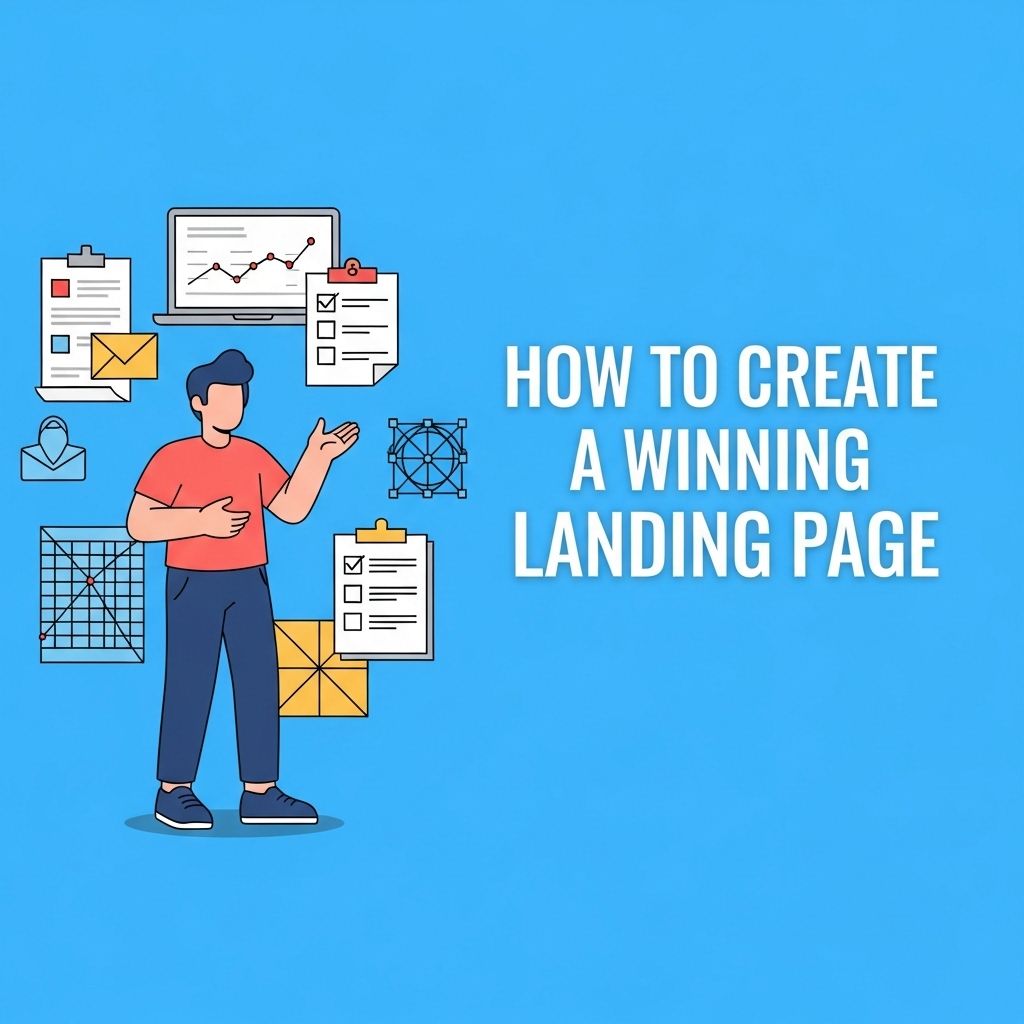
Creating a winning landing page is essential for converting visitors into leads and customers. A well-designed landing page can make all the difference in your marketing campaigns, whether you’re promoting a product, service, or an event. In this article, we will explore the key elements of an effective landing page, best practices, and examples to inspire your own designs.
Creating an effective landing page is crucial for capturing visitors’ attention and converting them into customers. By following five essential steps, you can design a landing page that not only draws in traffic but also enhances user experience. For more insights, check out these best practices for website design.
Understanding the Purpose of a Landing Page
A landing page is a standalone web page created specifically for a marketing or advertising campaign. Its main goal is to drive a specific action from visitors, such as signing up for a newsletter, downloading a free resource, or making a purchase. Unlike a home page, which typically provides a variety of information about a company, a landing page is focused and streamlined.
Key Goals of a Landing Page
- Lead Generation
- Product Promotion
- Event Registration
- Survey Participation
Essential Elements of an Effective Landing Page
To create a landing page that converts, there are several crucial elements you must include:
1. Compelling Headline
Your headline is the first thing visitors will see. It should be clear, concise, and convey the value of your offer. A strong headline can significantly impact your conversion rates.
2. Subheadline
A subheadline can provide additional information that supports the headline. It should succinctly elaborate on the offer and encourage visitors to continue reading.
3. Engaging Visuals
High-quality images or videos can enhance your message and create emotional engagement. Use visuals that are relevant to the content and resonate with your target audience.
4. Clear Call-to-Action (CTA)
The CTA is arguably the most vital component of your landing page. It should be prominent and clearly state what you want visitors to do. Make sure your CTA stands out visually and uses action-oriented language, such as:
- “Sign Up Now”
- “Download Free Guide”
- “Get Started”
5. Benefits and Features Section
Clearly outline the benefits and features of your product or service. Use bullet points to make this information easily digestible. Highlight how your offer solves a problem or fulfills a need for your audience.
6. Social Proof
Incorporate testimonials, reviews, or case studies to build trust and credibility. Use real names (with permission) and photos to add authenticity. A table showcasing key statistics or user success stories can also be effective:
| Name | Testimonial | Company |
|---|---|---|
| John Doe | This product changed my life! | Acme Corp |
| Jane Smith | I’ve never seen better results! | Beta Inc. |
7. Lead Capture Form
Your lead capture form should be simple and easy to fill out. Limit the number of fields to reduce friction. Test various forms to see which ones yield the highest conversion rates. Typical fields include:
- Name
- Email Address
- Phone Number (optional)
Best Practices for Designing Your Landing Page
When crafting your landing page, keep these best practices in mind:
1. Simplicity is Key
A cluttered page can distract visitors. Ensure that your landing page is clean, with plenty of whitespace. Focus on one primary goal and eliminate anything that doesn’t support that goal.
2. Optimize for Mobile
With mobile traffic accounting for a significant portion of website visits, it’s crucial that your landing page is optimized for mobile devices. Test responsiveness to ensure a seamless experience across devices.
3. A/B Testing
Always test different versions of your landing page to see what performs best. Experiment with headlines, images, CTAs, and layouts. Use A/B testing tools to gather data and make informed decisions.
Examples of High-Converting Landing Pages
Analyzing successful landing pages can provide inspiration for your own design. Here are a few notable examples:
1. HubSpot
HubSpot’s landing pages are known for their simplicity and effective use of testimonials.
2. Shopify
Shopify’s landing page effectively highlights the benefits of its platform through clear visuals and strong CTAs.
3. Airbnb
Airbnb employs engaging visuals combined with compelling offers that resonate with both hosts and travelers.
Measuring the Success of Your Landing Page
Once your landing page is live, it’s crucial to track its performance. Here are key metrics to monitor:
- Conversion Rate: The percentage of visitors who complete the desired action.
- Bounce Rate: The percentage of visitors who leave the page without taking action.
- Average Time on Page: Indicates how engaging the content is.
Conclusion
A winning landing page can significantly impact your marketing efforts and drive higher conversion rates. By focusing on clarity, simplicity, and user engagement, you can create a compelling landing page that effectively converts visitors into leads and customers. Remember to test and optimize continuously, and don’t hesitate to draw inspiration from successful landing pages in your niche.
FAQ
What are the key elements of a successful landing page?
A successful landing page typically includes a compelling headline, clear call-to-action (CTA), engaging visuals, concise text, and social proof elements such as testimonials or reviews.
How important is the design of a landing page?
The design of a landing page is crucial as it impacts user experience and conversion rates. A clean, professional design helps build trust and guides the visitor’s attention to key information.
What is the ideal length for a landing page?
The ideal length of a landing page can vary, but it should be long enough to convey your message and persuade visitors to take action, often between 300 to 800 words.
How can I optimize my landing page for conversions?
To optimize your landing page for conversions, focus on clear messaging, strong CTAs, A/B testing different elements, and ensuring fast load times to reduce bounce rates.
Should I include navigation links on my landing page?
It’s generally recommended to minimize or eliminate navigation links on a landing page to keep visitors focused on the primary goal and reduce distractions.