Investing in the stock market can be a powerful way to grow your wealth over time. For many, it represents a financial journey filled with opportunities, challenges, and learning experiences. Whether you’re a novice just dipping your toes into the world of equities or someone looking to brush up on the essentials, understanding the stock market’s basic principles is key to making informed decisions.
Investing in the stock market can seem daunting for beginners, but understanding the fundamentals is key to making informed decisions. This guide will break down the basics of stock market investing, from selecting the right stocks to managing your portfolio effectively. For creative projects related to your investment journey, you can download mug mockups for free to showcase your ideas.
Understanding the Stock Market
The stock market is a collection of markets where stocks (shares of ownership in businesses) are bought and sold. It serves as a platform for companies to raise capital and for investors to buy ownership in those companies. Here are some fundamental concepts:
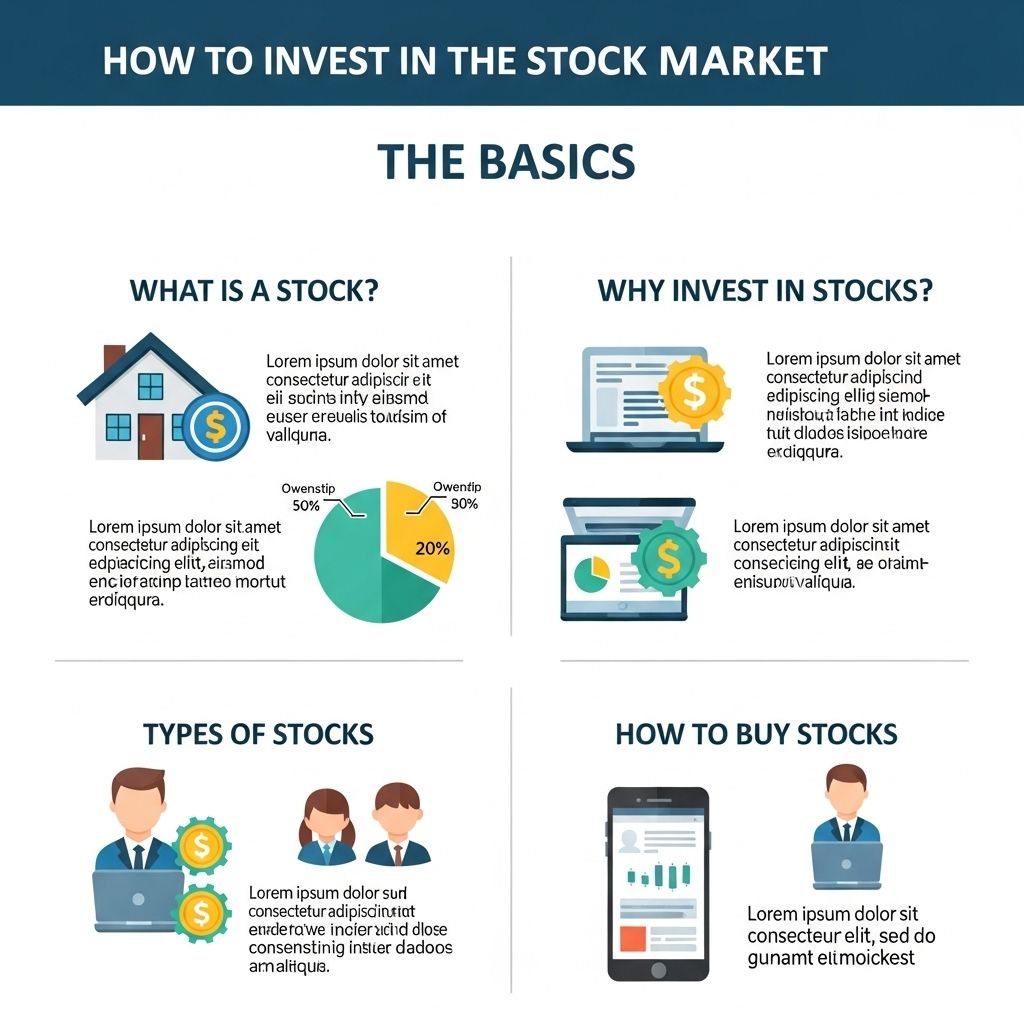
What is a Stock?
A stock represents a share in the ownership of a company and constitutes a claim on part of the company’s assets and earnings. There are two main types of stocks:
- Common Stocks: These give shareholders voting rights but may not guarantee dividends.
- Preferred Stocks: These typically do not provide voting rights, but they offer fixed dividends and a higher claim on assets in the event of liquidation.
How the Stock Market Works
Stocks are traded on exchanges, which are regulated marketplaces. Here’s how the process generally works:
- Company Goes Public: A company offers its shares to the public through an Initial Public Offering (IPO).
- Trading Shares: Investors buy and sell shares on stock exchanges such as the NYSE or NASDAQ.
- Market Makers and Brokers: Market makers facilitate the buying and selling of stocks, while brokers execute buy and sell orders on behalf of investors.
Why Invest in the Stock Market?
Investing in the stock market offers several advantages:
- Potential for High Returns: Historically, the stock market has offered higher returns compared to other investment vehicles like bonds or savings accounts.
- Liquidity: Stocks can be bought and sold quickly, providing access to your money when needed.
- Diversification: Investing in a variety of stocks can help spread risk and minimize losses.
Getting Started with Stock Market Investing
Before you invest in the stock market, consider taking the following steps:
1. Set Your Investment Goals
Determine what you want to achieve with your investments. Your goals should guide your investment strategy. Common goals include:
- Saving for retirement
- Building a college fund
- Generating income through dividends
2. Educate Yourself
Knowledge is power. Familiarize yourself with essential terms and concepts, such as:
| Term | Description |
|---|---|
| Dividend | Payments made to shareholders from a company’s profits. |
| Market Capitalization | The total value of a company’s outstanding shares of stock. |
| Volatility | The degree to which a stock price fluctuates over time. |
| Bear Market | A market condition where prices are falling or are expected to fall. |
| Bull Market | A market condition where prices are rising or are expected to rise. |
3. Choose an Investment Account
You’ll need a brokerage account to start investing. Consider the following options:
- Full-Service Brokers: Provide personalized advice but usually charge higher fees.
- Discount Brokers: Allow you to trade with lower fees, but offer minimal guidance.
- Robo-Advisors: Use algorithms to manage your investments based on your risk tolerance and goals.
4. Create a Budget
Allocate a specific amount for investing and stick to it. It’s crucial to have a clear investment budget:
- Determine how much you can afford to invest.
- Consider setting up automatic contributions to your investment account.
Investment Strategies
There are various strategies you can adopt when investing in stocks. Here are a few popular ones:
Value Investing
This strategy focuses on buying undervalued stocks that have the potential for long-term growth. Investors look for stocks with:
- Low price-to-earnings (P/E) ratios
- Strong fundamentals
- High dividend yields
Growth Investing
Growth investors look for companies that exhibit signs of above-average growth, even if the stock appears expensive:
- High revenue growth
- Strong competitive advantage
- Potential for increased market share
Dividend Investing
This strategy involves investing in companies that regularly pay dividends. Benefits include:
- Regular income stream
- Potential for reinvestment growth
- Reduced volatility during market downturns
Managing Your Portfolio
Once you’ve invested, managing your portfolio is essential. Factors to consider include:
1. Diversification
Spread your investments across different sectors and asset classes to reduce risk.
2. Regular Review
Assess the performance of your investments at least quarterly and make adjustments as needed.
3. Risk Management
Understand your risk tolerance and adjust your investments accordingly. Tools for managing risk include:
- Stop-loss orders
- Hedging strategies
- Asset allocation adjustments
Common Mistakes to Avoid
Even seasoned investors make mistakes. Here are some common pitfalls to watch out for:
- Emotional Investing: Avoid making decisions based on fear or greed.
- Failing to Do Research: Always research before making investment decisions.
- Timing the Market: It’s nearly impossible to predict market highs and lows consistently.
Conclusion
Investing in the stock market is not just for the wealthy or the experienced; it is accessible to anyone willing to learn and engage. By understanding the basics, setting clear goals, and adopting smart strategies, you can navigate the market with confidence. As you embark on this journey, remember that patience and discipline are your greatest allies in achieving long-term success.
FAQ
What are the basics of investing in the stock market?
Investing in the stock market involves buying shares of publicly traded companies with the expectation that their value will increase over time. Key concepts include understanding stock types, market orders, and diversification.
How do I start investing in stocks?
To start investing in stocks, you need to open a brokerage account, research potential investments, and decide on a strategy, whether it’s long-term investing, day trading, or value investing.
What is diversification and why is it important?
Diversification is the practice of spreading your investments across various assets to reduce risk. It’s important because it can help minimize losses if one investment underperforms.
What is a stock market index?
A stock market index is a measurement of a section of the stock market. It represents a portfolio of stocks and is used to track the performance of the market or a specific industry.
How can I research stocks before investing?
You can research stocks by analyzing financial statements, reading company news, using stock analysis tools, and reviewing analyst ratings to make informed investment decisions.