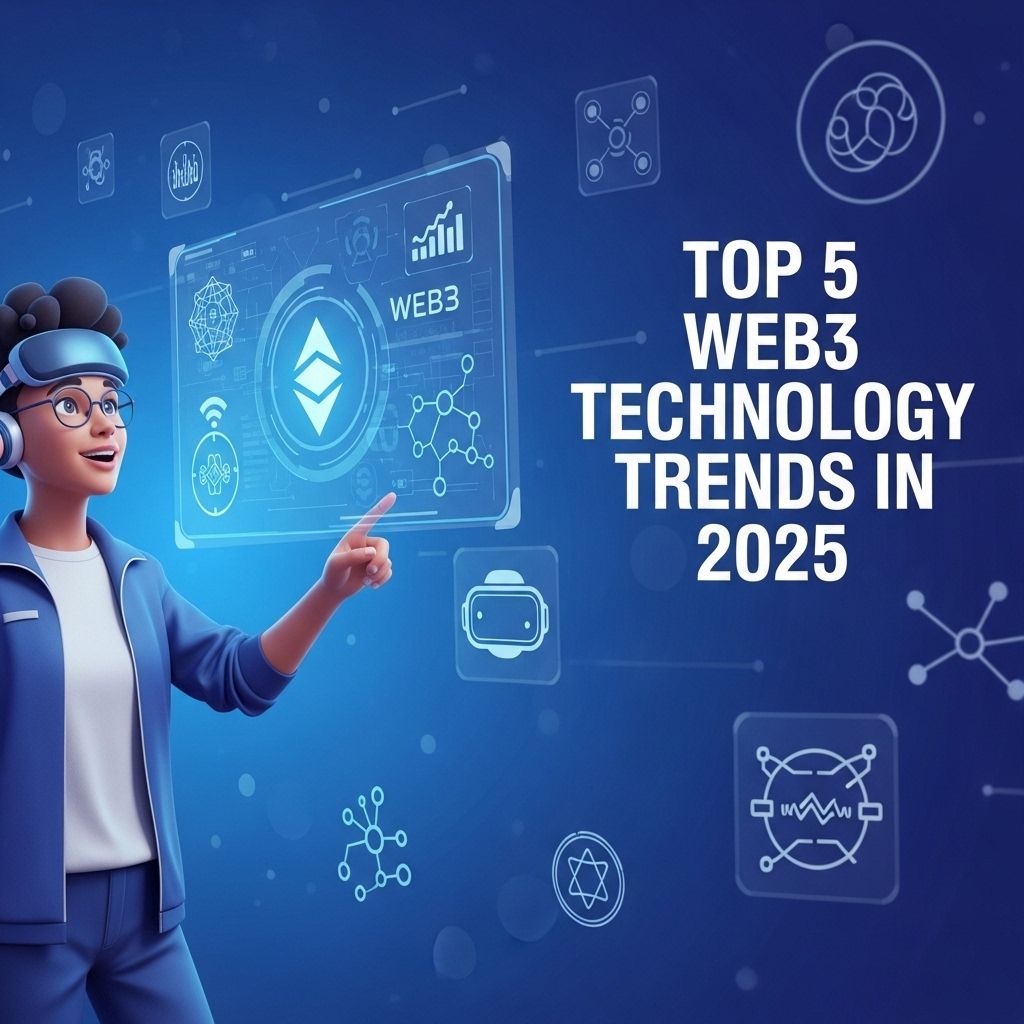
As we venture deeper into the digital age, the emergence of Web3 technologies promises to reshape our interactions, economies, and data ownership. This next-generation internet paradigm, characterized by decentralization, blockchain integration, and immersive user experiences, is gaining momentum. In 2025, we can expect significant advancements across various sectors, driven by a combination of innovation and shifting consumer demands.
As we look toward 2025, the landscape of Web3 technology is poised for significant transformation. With advancements in decentralized finance, NFT interoperability, and enhanced blockchain scalability, it’s crucial to stay informed about the top trends shaping this space. Explore our diverse models to understand how these innovations could impact various industries.
Understanding Web3
Before diving into the specific trends, it’s essential to grasp what Web3 entails. Unlike Web1 (the static web) and Web2 (the dynamic, social web), Web3 emphasizes:
- Decentralization: Reducing reliance on central authorities.
- Ownership: Empowering users to own and control their data.
- Interoperability: Enabling seamless interaction across platforms.
- Incentivization: Rewarding users for their participation and contributions.
Trend 1: Decentralized Finance (DeFi) Evolution
Decentralized finance has been a hot topic, but by 2025, its evolution will present new opportunities and challenges. DeFi platforms will likely become more user-friendly, integrating AI and machine learning to enhance user experiences.
Key Features of DeFi in 2025
- Smart Financial Instruments: Introduction of advanced derivatives and insurance products.
- Cross-Chain Compatibility: Improved interoperability between different blockchain networks.
- Regulatory Compliance: Enhanced measures to comply with evolving regulations.
Benefits of DeFi
- Access to financial services for the unbanked population.
- Reduction in transaction costs due to elimination of intermediaries.
- Increased transparency through blockchain technology.
Trend 2: Non-Fungible Tokens (NFTs) Going Mainstream
As digital ownership becomes more prominent, NFTs will transition from niche markets to mainstream adoption. Expect to see a diversification of applications beyond art and collectibles.
Applications of NFTs in 2025
| Sector | Examples | Impacts |
|---|---|---|
| Gaming | Play-to-earn models, in-game asset ownership | Empowering gamers with tangible value |
| Real Estate | Property tokenization, fractional ownership | Increasing investment accessibility |
| Music | Direct-to-fan sales, royalties tracking | Enhancing artist revenue potential |
Challenges Ahead
Despite the potential, NFTs face challenges such as environmental concerns and copyright issues that need to be addressed for sustainable growth.
Trend 3: The Rise of Decentralized Autonomous Organizations (DAOs)
DAOs are expected to redefine organizational structures, allowing communities to govern themselves through smart contracts. This democratic approach fosters transparency and community involvement.
Advantages of DAOs
- Transparent decision-making processes.
- Reduced bureaucracy and faster execution.
- Enhanced community engagement and ownership.
Use Cases of DAOs
- Investment funds pooling resources for collective investing.
- Charitable organizations where members vote on fund allocation.
- Creative projects that reward contributors fairly.
Trend 4: Enhanced Privacy and Security Protocols
With growing concerns over data privacy, Web3 will prioritize security and user control over personal information. Technologies like zero-knowledge proofs and decentralized identifiers will gain traction.
Privacy Technologies to Watch
- Zero-Knowledge Proofs: Allowing users to prove information without revealing the underlying data.
- Self-Sovereign Identity: Giving users full control over their digital identities.
Impact on Users
By implementing robust privacy measures, users will experience:
- Greater confidence in sharing information.
- Reduction in identity theft and fraud.
- Empowerment through control over personal data.
Trend 5: The Metaverse Expansion
The concept of the metaverse is becoming increasingly tangible, merging virtual and augmented reality with Web3 technologies. In 2025, expect a greater number of platforms enabling users to interact in immersive environments.
Features of the Future Metaverse
- Interconnected Virtual Spaces: Seamless transitions between different metaverse platforms.
- Enhanced User Experiences: AI-driven personalization and real-time interactions.
- Decentralized Ownership: Users owning virtual assets through NFTs.
Potential Uses of the Metaverse
- Virtual real estate leading to investment opportunities.
- Business meetings in virtual spaces boosting remote teamwork.
- Educational experiences that simulate real-world scenarios.
Conclusion
As we look ahead to 2025, the synergy of these trends will play a pivotal role in shaping a more decentralized, user-driven internet. Embracing these advancements will not only empower individuals but also redefine the way we approach finance, ownership, governance, and digital spaces. The future of Web3 is not just a technological evolution; it is a cultural transformation that invites us to rethink our relationships with technology, data, and each other.
FAQ
What are the top Web3 technology trends to watch in 2025?
In 2025, the top Web3 technology trends include decentralized finance (DeFi) advancements, increased adoption of non-fungible tokens (NFTs), enhanced interoperability between blockchains, the rise of decentralized autonomous organizations (DAOs), and the integration of artificial intelligence (AI) in blockchain applications.
How will decentralized finance (DeFi) evolve in 2025?
By 2025, DeFi is expected to become more mainstream, with improved security measures, greater regulatory clarity, and the introduction of user-friendly interfaces, making financial services more accessible to a broader audience.
What role will NFTs play in the Web3 landscape of 2025?
In 2025, NFTs will expand beyond digital art and collectibles, finding applications in gaming, virtual real estate, and identity verification, thereby enhancing their utility and mainstream acceptance.
Why is interoperability important for Web3 technologies in 2025?
Interoperability will be crucial in 2025 as it allows different blockchains to communicate and share data seamlessly, enabling a more connected ecosystem that enhances user experience and fosters innovation.
What impact will DAOs have on governance in 2025?
DAOs will revolutionize governance in 2025 by providing decentralized decision-making structures, allowing communities to manage projects and resources collectively, thereby increasing transparency and accountability.
How will artificial intelligence (AI) influence Web3 technologies by 2025?
AI will enhance Web3 technologies in 2025 by enabling smarter contract execution, predictive analytics for market trends, and improved user experiences through personalized services, ultimately driving innovation in the space.