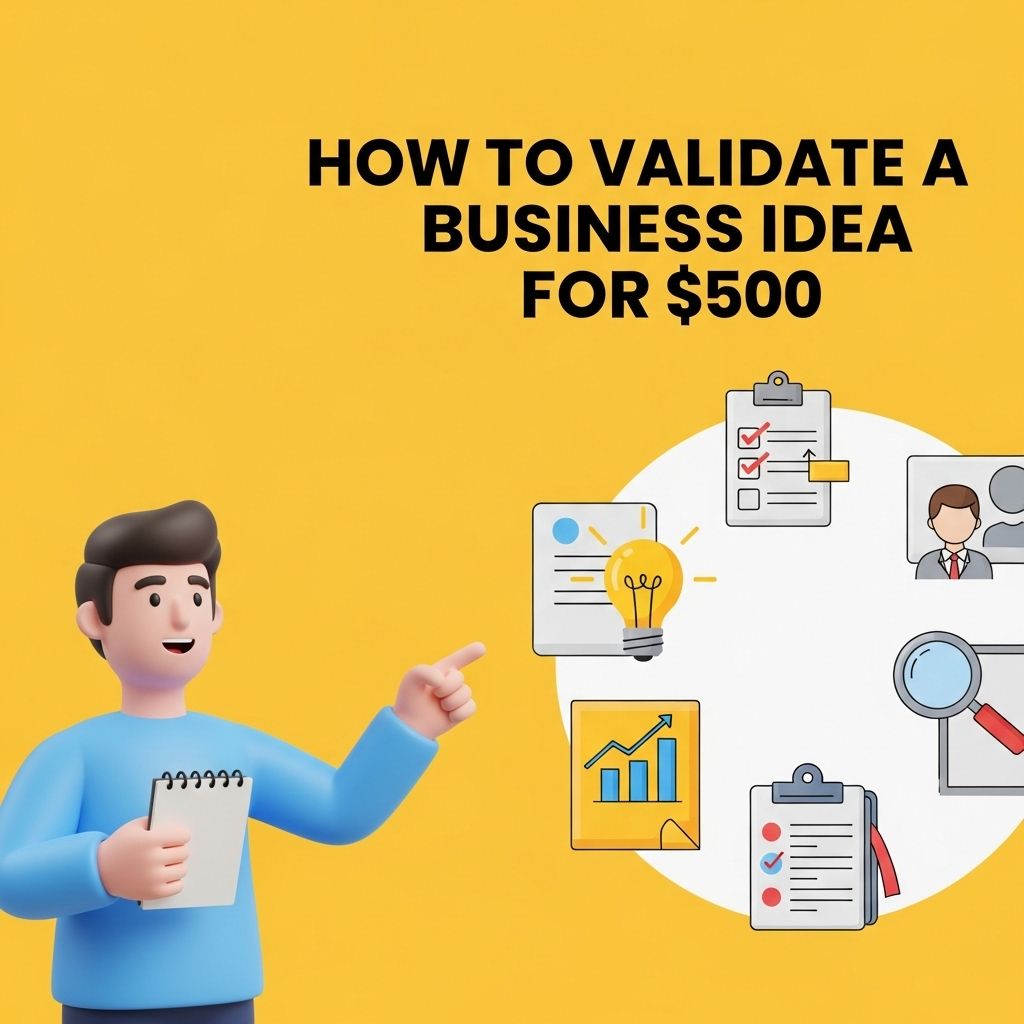
In today’s entrepreneurial landscape, validating a business idea has become a critical step for aspiring entrepreneurs. With the right approach, you can significantly reduce the risks associated with launching a new venture. This article will explore effective strategies to validate your business idea, all while staying within a budget of $500.
Validating your business idea doesn’t have to break the bank; in fact, you can accomplish it for under $500. By utilizing tools like market surveys, social media feedback, and free resources such as mockups, you can efficiently gauge interest and refine your concept. For instance, you can download mug mockups for free to visualize your product and gather valuable insights from potential customers.
Understanding Business Idea Validation
Business idea validation is the process of testing the viability of your concept before investing significant time and resources. This process helps entrepreneurs understand whether there is a market for their idea and if potential customers will pay for it. By validating your business concept, you ensure that you are building something that people genuinely want.
Why Validate Your Business Idea?
- Reduces Risks: Validating your idea helps identify potential pitfalls early.
- Saves Money: Ensures that you are not spending on a product that has no market demand.
- Informs Decision-Making: Provides data-driven insights to guide your business strategy.
- Refines Your Concept: Feedback can help you refine your idea for better market fit.
Setting a Validation Budget
With a budget of $500, it’s essential to prioritize your validation efforts. Here are some ways to allocate your funds effectively:
| Activity | Cost Estimate |
|---|---|
| Market Research | $100 |
| Prototyping | $150 |
| Customer Interviews | $100 |
| Online Surveys | $50 |
| Social Media Ads | $100 |
Effective Validation Strategies
1. Conduct Market Research
Start by understanding the market landscape. Research your competitors, target audience, and industry trends. You can use online tools such as:
- Google Trends: Identify the popularity of your business idea over time.
- Statista: Access a wealth of statistics and reports.
- SEMrush: Analyze competitor traffic and keywords.
2. Create a Minimum Viable Product (MVP)
Develop a simple version of your product or service that showcases its core features. This does not have to be fully functional but should demonstrate the primary value proposition. You can create an MVP using DIY tools or hire freelancers from platforms like Fiverr or Upwork within your budget.
3. Customer Interviews and Surveys
Engage with potential customers to gather feedback. You can:
- Identify potential users through social media and professional networks.
- Conduct interviews to gain qualitative insights.
- Distribute online surveys using tools like SurveyMonkey or Google Forms to gather quantitative data.
4. Launch a Landing Page
Create a simple landing page describing your business idea and offering a way for visitors to sign up for updates. Use platforms like WordPress, Wix, or Squarespace, which offer free or low-cost options. Promote the landing page through social media channels or Google Ads.
5. Leverage Social Media Advertising
Invest a portion of your budget into targeted ads on platforms like Facebook or Instagram. This can help you gauge interest in your product and collect email addresses of potential customers.
Analyzing Feedback and Making Decisions
Once you have gathered data from your validation efforts, it’s time to analyze the results:
- Identify Patterns: Look for common themes or feedback points across customer responses.
- Gauge Interest: Measure how many people showed willingness to buy or sign up for more information.
- Understand Pain Points: Use feedback to identify and rectify potential shortcomings in your product.
Using Analytics Tools
Utilize analytics tools like Google Analytics to track visitor behavior on your landing page. Pay attention to metrics such as:
- Page views
- Time spent on the page
- Conversion rates
Iterate Based on Findings
After analyzing the feedback, you might find that you need to pivot or refine your idea. Don’t be afraid to make changes based on what you’ve learned. Successful entrepreneurs often iterate their ideas multiple times before arriving at a final product that resonates with customers.
Conclusion
Validating a business idea within a $500 budget is not only feasible but also necessary for success. By following the strategies outlined in this article – conducting market research, creating an MVP, engaging with customers, and analyzing feedback – you can enter the entrepreneurial world with confidence. Remember, the validation process is dynamic, and continuous feedback will help you adapt and grow your business in the long run.
FAQ
What is the first step to validate a business idea for $500?
The first step is to conduct thorough market research to understand your target audience, their needs, and the competition.
How can I gather feedback on my business idea with a $500 budget?
You can use online surveys, focus groups, or social media polls to gather feedback from potential customers without exceeding your budget.
What tools can I use to validate my business idea cheaply?
Utilize free or low-cost tools like Google Trends, social media analytics, and platforms like SurveyMonkey to assess interest in your idea.
Is it possible to create a prototype for my business idea under $500?
Yes, you can create a minimum viable product (MVP) or a simple prototype using low-cost materials or digital tools to test your concept.
How can I leverage social media to validate my business idea?
You can create social media ads or posts to gauge interest in your business idea and engage with your target audience for feedback.
What common mistakes should I avoid when validating a business idea on a budget?
Avoid relying solely on friends and family for feedback, neglecting to analyze competitors, and skipping the testing phase before launch.