In an era where customer relationships can make or break a business, utilizing the right tools to manage those interactions is crucial. Customer Relationship Management (CRM) systems have emerged as essential resources for companies looking to streamline their processes, enhance customer satisfaction, and increase profitability. For small businesses, where every resource counts, selecting the right CRM tool can empower teams and facilitate growth. This article takes an in-depth look at the top CRM tools specifically designed to cater to small business needs, providing insights into their features, pricing, and how they can transform your customer engagement strategies.
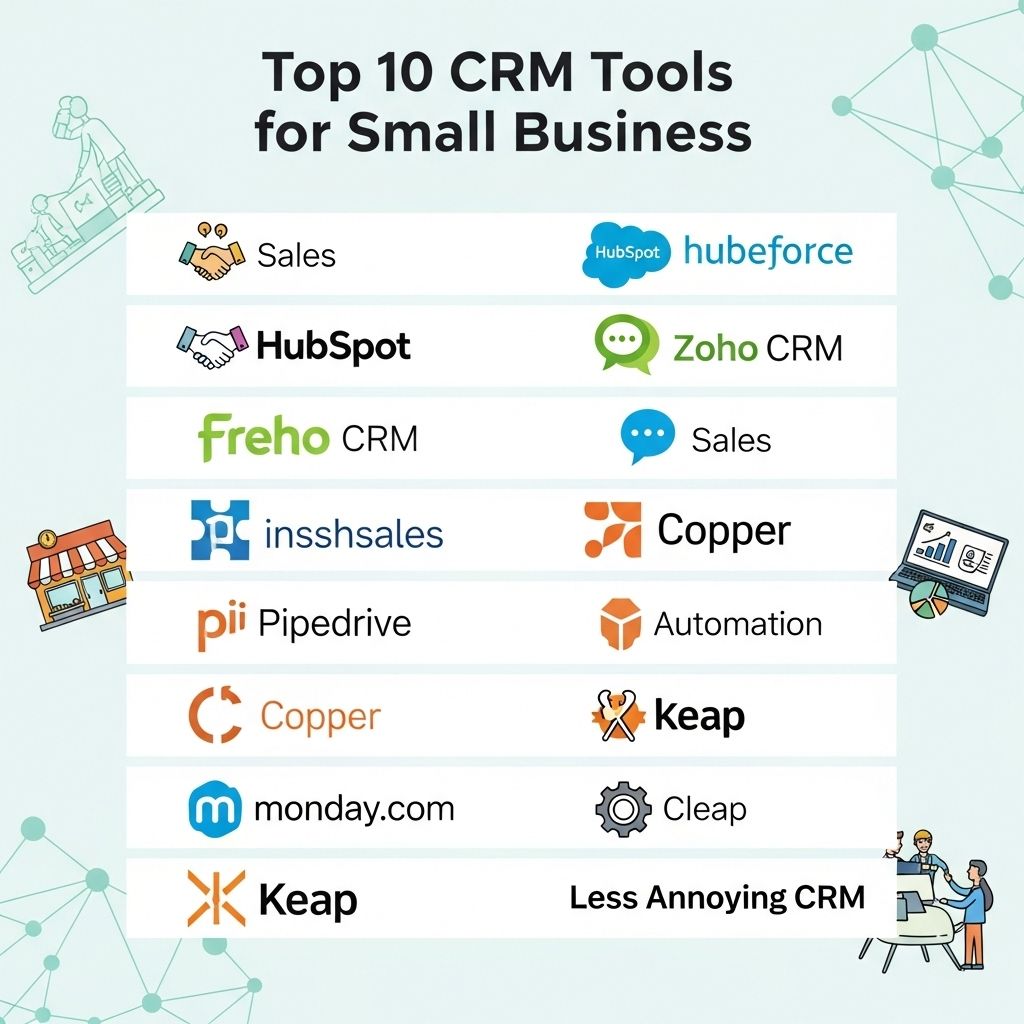
As small businesses strive to enhance customer relationships and streamline operations, selecting the right CRM tool is essential in 2023. This guide presents the top 10 CRM solutions tailored for small enterprises, focusing on features, ease of use, and scalability. For businesses seeking advanced functionalities, check out premium options.
Understanding CRM Tools
Before diving into the top tools, it’s important to understand what a CRM system does and how it can benefit small businesses. At its core, a CRM tool allows businesses to manage interactions with current and potential customers by consolidating information into a single database. This facilitates better communication, improves customer service, and ultimately drives sales.
Key Features of CRM Tools
- Contact Management: Organize and manage your customer database effectively.
- Sales Management: Track sales pipelines and manage leads.
- Customer Support: Enhance customer service with ticketing systems and support tracking.
- Analytics and Reporting: Generate reports to analyze customer behavior and sales performance.
- Integration: Connect with other business tools and platforms for enhanced productivity.
1. HubSpot CRM
HubSpot CRM is known for its user-friendly interface and robust features, making it a popular choice among small businesses. It offers a free version with essential features and paid plans that provide additional functionalities.
Key Features
- Email tracking and notifications
- Meeting scheduling
- Pipeline management
- Reports and analytics
Pricing
The free plan offers basic capabilities, while paid plans start at $50/month based on the number of users and features needed.
2. Zoho CRM
Zoho CRM is a well-rounded solution that offers a flexible interface and comprehensive features tailored to small businesses. This tool is particularly noted for its customization options.
Key Features
- Lead and contact management
- Sales automation
- Workflow automation
- Analytics and forecasting
Pricing
Zoho CRM offers a free plan for 3 users, with premium plans starting at $12/user/month, making it cost-effective.
3. Salesforce Essentials
Salesforce is a powerhouse in the CRM industry, and its Essentials plan is tailor-made for small businesses. It allows for powerful customer management features while remaining accessible.
Key Features
- Lead and opportunity management
- Customization options
- Mobile access
- App integrations
Pricing
Salesforce Essentials starts at $25/user/month, offering a comprehensive suite of features.
4. Pipedrive
Pipedrive is a sales-focused CRM that helps small businesses streamline their sales processes. Its visual sales pipelines are easy to navigate, making it user-friendly.
Key Features
- Activity and goal tracking
- Visual sales pipeline
- Lead management tools
- Customizable reporting
Pricing
Pipedrive plans start at $15/user/month, ideal for small teams looking to maximize sales efficiency.
5. Freshsales
Freshsales, part of the Freshworks suite, is a CRM solution designed to enhance the sales process with a focus on automation and AI-driven insights.
Key Features
- AI-based lead scoring
- Visual sales pipeline
- In-app calling
- Customizable dashboard
Pricing
Freshsales offers a free tier with basic features, while premium plans start at $15/user/month.
6. Insightly
Insightly is a project management and CRM tool that allows small businesses to manage customer relationships alongside ongoing projects. This dual functionality can be particularly beneficial for service-oriented businesses.
Key Features
- Project management capabilities
- Email tracking
- Task management
- Customizable reports
Pricing
Insightly’s pricing starts at $29/user/month, making it accessible for small teams.
7. Copper
Copper is a CRM tool designed specifically for Google Workspace users. It offers seamless integration with Gmail and Google apps, making it a convenient choice for businesses already using these tools.
Key Features
- Gmail integration
- Contact syncing
- Document management
- Custom workflows
Pricing
Copper plans start at $24/user/month, focusing on integration and usability for Google Workspace.
8. Nimble
Nimble is a social CRM platform that merges various social media profiles with customer data, allowing small businesses to engage with customers through multiple channels.
Key Features
- Social media integration
- Contact management
- Sales forecasting
- Email marketing tools
Pricing
Nimble offers a free trial, with pricing starting at $19/user/month.
9. monday.com
Although primarily a project management tool, monday.com also offers a CRM solution that allows small businesses to track customer interactions alongside ongoing projects.
Key Features
- Customizable workflows
- Visual project tracking
- Collaboration tools
- Integrations with various applications
Pricing
Plans start at $10/user/month, making it a flexible option for teams looking to combine project management and CRM.
10. Keap (formerly Infusionsoft)
Keap is a CRM and marketing automation tool designed specifically for small businesses. It combines CRM functionalities with marketing automation, helping businesses to nurture leads effectively.
Key Features
- Lead capture and segmentation
- Email marketing automation
- Sales pipeline management
- Invoicing and payment collection
Pricing
Keap pricing starts at $79/month, which includes a suite of marketing and sales features.
Choosing the Right CRM Tool
Selecting the right CRM tool depends on various factors such as:
- Your business size and growth stage
- The features most relevant to your operations
- Your budget and pricing preferences
- The level of customer support and training provided
- Integration capabilities with existing tools
Conducting a thorough evaluation of these aspects will lead to a wise investment in a CRM tool that can significantly enhance your business operations.
Conclusion
Choosing the right CRM tool can profoundly impact how your small business interacts with customers and manages sales processes. In this ever-evolving digital landscape, utilizing technology to streamline customer relationships is not just advantageous but essential for growth and sustainability. Each of the tools mentioned offers unique features and strengths, allowing small businesses to find the perfect fit for their specific requirements.
FAQ
What is a CRM tool and why is it important for small businesses?
A CRM tool is a Customer Relationship Management system that helps small businesses manage interactions with customers and streamline processes. It is important for small businesses to enhance customer relationships, improve sales efficiency, and provide better customer service.
What are the top CRM tools available for small businesses?
Some of the top CRM tools for small businesses include HubSpot CRM, Salesforce Essentials, Zoho CRM, Pipedrive, and Freshsales, among others.
How do I choose the right CRM for my small business?
To choose the right CRM, consider factors such as your budget, the size of your team, specific features you need (like email integration or reporting), ease of use, and customer support.
Are CRM tools easy to use for small business owners?
Many modern CRM tools are designed with user-friendliness in mind, offering intuitive interfaces and tutorials to help small business owners navigate the system quickly.
Can CRM tools help improve sales for small businesses?
Yes, CRM tools can significantly improve sales by providing insights into customer behavior, automating follow-ups, and allowing for more personalized communication, which can lead to increased conversions.
How much do CRM tools typically cost for small businesses?
The cost of CRM tools varies widely, with some offering free tiers while others may charge monthly fees ranging from $12 to $300 per user, depending on the features and capabilities.