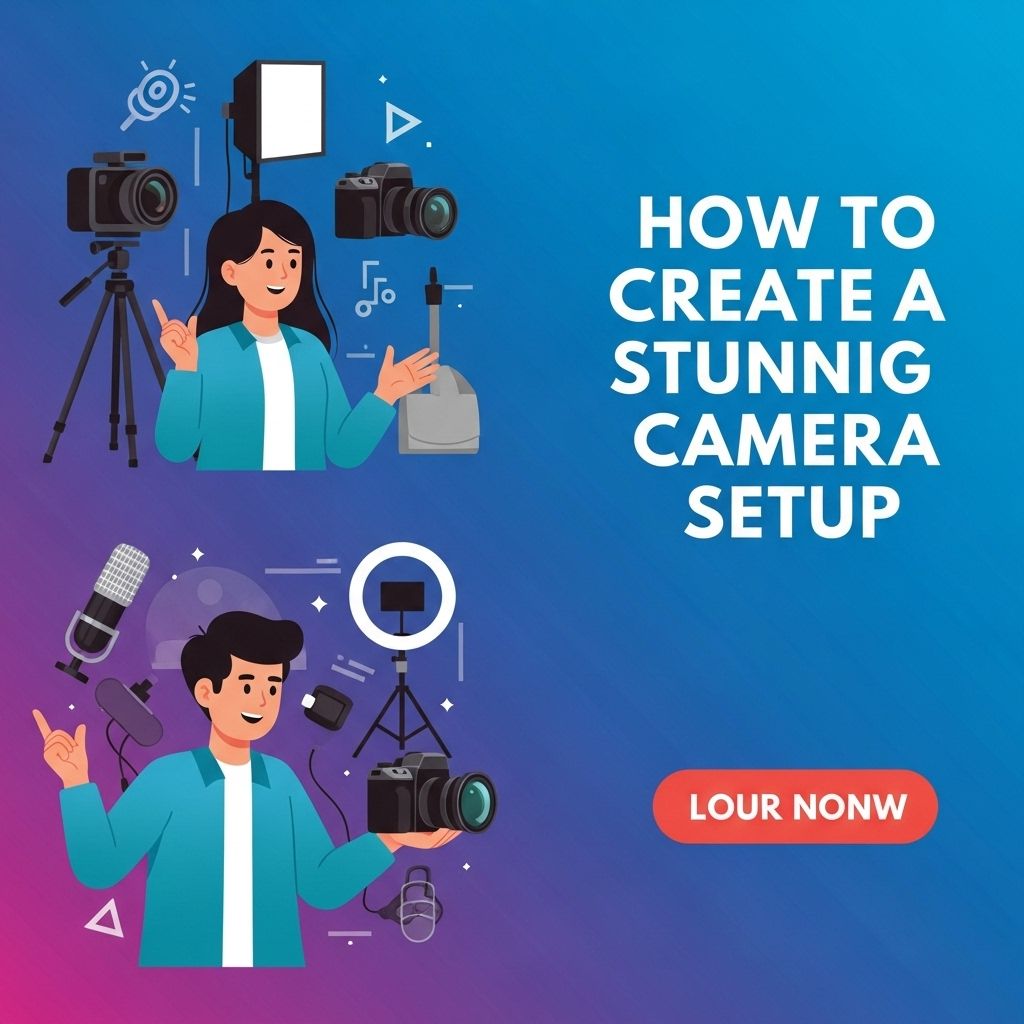
In the realm of photography and videography, having a stunning camera setup can be the difference between capturing breathtaking visuals and mediocre shots. Whether you’re a budding enthusiast or a seasoned professional, understanding the components of a well-equipped camera setup is crucial. This article delves into the essentials of building a camera setup that meets your creative needs, emphasizing quality, versatility, and functionality.
Creating a stunning camera setup is vital for capturing breathtaking images and elevating your photography game. With the right tips and tricks, you can enhance your equipment and workflow to achieve professional results. For a great way to showcase your work, View our latest model mockups.
Understanding Your Needs
Before diving into the world of camera gear, it’s important to assess what you’ll be using your setup for. Different purposes call for different equipment:
- Photography: If your primary focus is still photography, consider the type of photography you want to pursue, such as portrait, landscape, or macro.
- Videography: For video production, think about the resolution (4K, 1080p), frame rates, and whether you’ll need additional features like slow motion or time-lapse capabilities.
- Streaming: If you’re looking to stream, consider factors such as live broadcasting, audio quality, and lighting.
Choosing the Right Camera
The first step in creating your camera setup is selecting the right camera body. Here are some popular options:
| Camera Type | Best For | Key Features |
|---|---|---|
| DSLR | All-purpose photography and videography | Interchangeable lenses, optical viewfinder |
| Mirrorless | Compact shooting with high performance | Lightweight, fast autofocus, electronic viewfinder |
| Point-and-Shoot | Casual photography | Compact, easy to use, built-in zoom |
| Action Camera | Adventure and sports | Durable, waterproof, wide-angle lens |
Considerations When Selecting a Camera
When choosing a camera, consider the following:
- Sensor Size: Larger sensors typically provide better image quality.
- Megapixels: While high megapixels are great for detail, they aren’t the only quality indicator.
- ISO Range: A wider ISO range allows for better performance in low light.
- Autofocus System: Fast and accurate autofocus systems are essential, especially for moving subjects.
Essential Lenses
Lenses significantly influence the quality of your images and videos. Here are some must-have lenses based on different photography styles:
For Portraits
- 50mm f/1.8: Great for depth of field and low-light conditions.
- 85mm f/1.4: Ideal for professional-quality portraits.
For Landscapes
- 16-35mm f/4: Wide-angle shots that capture expansive views.
- 24-70mm f/2.8: Versatile for various landscape types.
For Macro Photography
- 100mm f/2.8: Perfect for close-up shots of subjects like flowers and insects.
Tripods and Stabilization Gear
To ensure stability and avoid camera shake, investing in a good tripod is essential. Here are types to consider:
- Standard Tripods: Versatile and suitable for most conditions.
- Gorillapods: Flexible legs allow for unique angles.
- Monopods: Useful for quick setups and mobility.
Gimbals for Videography
If you’re focused on video, consider using a gimbal for smooth motion. Gimbals help stabilize your camera while moving, enhancing the quality of your footage. Popular gimbal brands include:
- Dji Ronin
- Zhiyun Crane
- FeiyuTech
Lighting Equipment
Good lighting can make or break your shots. Here are some key lighting tools to enhance your setup:
Types of Lighting
- Softboxes: Provide soft, diffused light ideal for portraits.
- Ring Lights: Perfect for close-ups and vlogging.
- LED Panels: Adjustable brightness and color temperature for versatility.
Natural Light vs. Artificial Light
Natural light is wonderful but can be unpredictable. Artificial lighting gives you more control, allowing you to create consistent results regardless of the environment.
Audio Equipment
Quality audio is just as important as quality visuals. Consider adding the following to your camera setup:
Microphones
- Shotgun Microphones: Great for directional audio capture.
- Lavalier Microphones: Ideal for interviews and presentations.
- Handheld Microphones: Versatile for various situations.
Audio Recorders
Investing in an external audio recorder can significantly enhance your sound quality. Popular models include:
- Zoom H4n Pro
- Tascam DR-40X
Post-Production Tools
Editing is where your footage truly comes to life. Here are some of the best software options:
Photo Editing Software
- Adobe Lightroom: Excellent for photo editing and organization.
- Adobe Photoshop: The go-to for detailed retouching.
Video Editing Software
- Adobe Premiere Pro: Industry-standard for video editing.
- Final Cut Pro X: A favorite among Mac users.
Community and Learning Resources
Enhancing your skills is a continuous process. Here are some resources to help you grow:
- Online Courses: Platforms like Udemy, Skillshare, and Coursera offer photography and videography courses.
- YouTube Channels: Channels like Peter McKinnon and DSLR Video Shooter provide valuable tips and tutorials.
- Photography Forums: Engage with communities on Reddit or photography-specific forums for tips and feedback.
Conclusion
Creating a stunning camera setup requires thoughtful consideration of your individual needs and the components that will help you achieve your creative vision. By selecting the right camera, lenses, lighting, audio equipment, and post-production tools, you can elevate your photography and videography skills to new heights. Embrace the journey of exploration, and let your creativity shine through every frame you capture!
FAQ
What are the essential components of a stunning camera setup?
A stunning camera setup typically includes a high-quality camera body, a versatile lens, a sturdy tripod, proper lighting equipment, and a reliable microphone for clear audio.
How do I choose the right lens for my camera setup?
Choosing the right lens depends on your shooting style; for portraits, consider a prime lens with a wide aperture, while for landscapes, a wide-angle lens is ideal.
What lighting equipment is best for video production?
Softbox lights, LED panels, and ring lights are popular choices for video production as they provide even and flattering lighting.
How can I improve the audio quality in my camera setup?
Using an external microphone, such as a lapel or shotgun mic, can significantly improve audio quality compared to the built-in microphone on your camera.
What accessories should I consider for my camera setup?
Important accessories include a lens filter, a camera bag for protection, extra batteries, and memory cards for storage.
How do I maintain my camera equipment for longevity?
Regularly clean your lenses, store your camera in a dry place, and avoid exposing it to extreme temperatures to maintain your camera equipment.