In the ever-evolving landscape of digital marketing, achieving a high ranking on Google search results is a coveted goal for businesses and content creators alike. While there’s no magic formula that guarantees instant success, there are proven strategies that can significantly expedite the process. This article explores the essential techniques to help your website climb the search engine results pages (SERPs) quickly and efficiently.
To rank on Google quickly, focus on optimizing your website for fast loading speeds and mobile responsiveness. Implementing effective SEO strategies, such as using relevant keywords and creating quality content, can significantly improve your visibility. For more on building a strong online presence, check out creating stunning websites.
Understanding Search Engine Optimization (SEO)
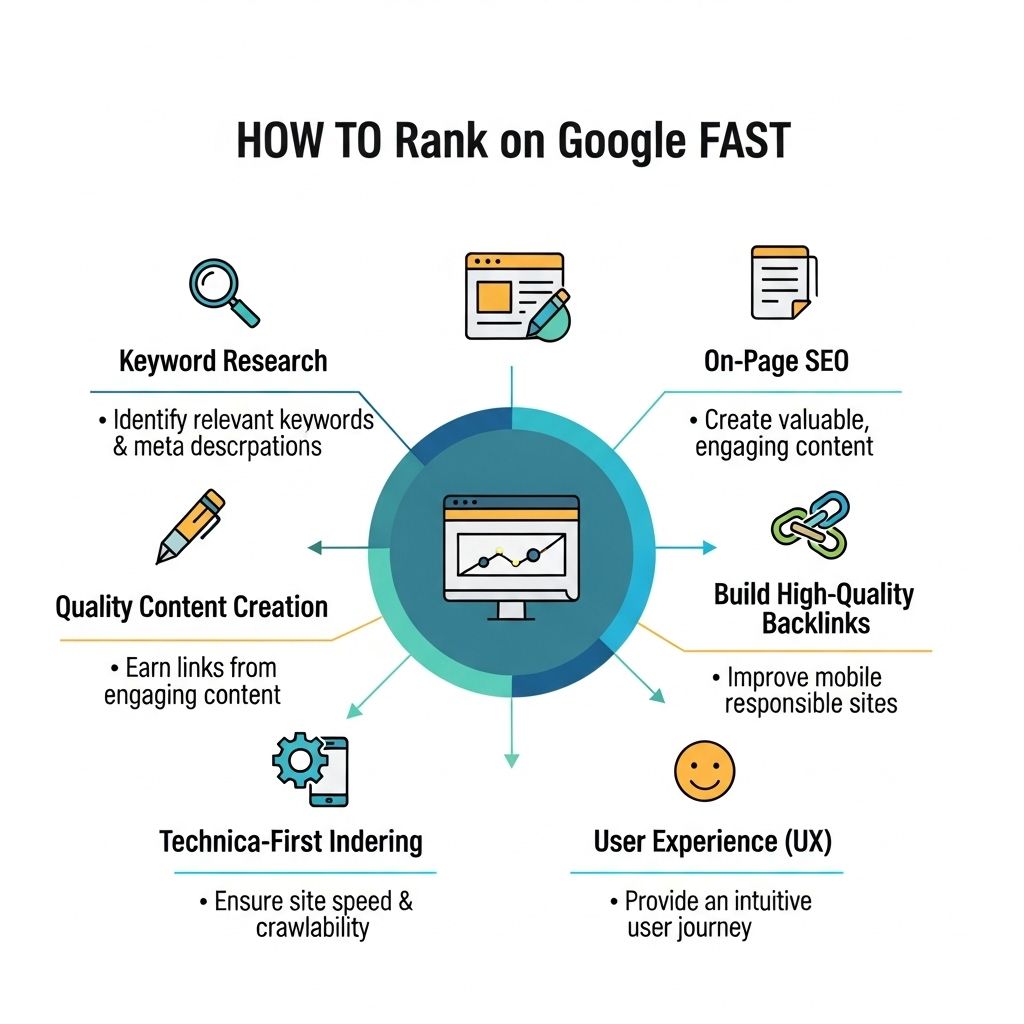
SEO is the practice of optimizing your website to enhance its visibility when users search for relevant terms on search engines. Successful SEO involves a combination of technical, on-page, and off-page strategies. Here’s a breakdown:
1. Technical SEO
To rank on Google quickly, focus on optimizing your content with relevant keywords and ensure your site is mobile-friendly and fast-loading. Quality backlinks and engaging visuals can also enhance user experience, contributing to improved rankings. For more effective strategies, explore our articles.
Technical SEO refers to the backend optimizations that help search engines crawl and index your site effectively. Key components include:
- Site Speed: Ensure your website loads quickly; a good benchmark is under 3 seconds.
- Mobile Friendliness: With a significant portion of web traffic coming from mobile devices, your site must be responsive.
- XML Sitemap: Create and submit a sitemap to help search engines understand your site structure.
- Robots.txt: Use this file to instruct search engines on which pages to crawl and which to ignore.
2. On-Page SEO
On-page SEO involves optimizing individual pages on your website. Here’s how:
- Keyword Research: Identify keywords relevant to your audience and incorporate them naturally into your content.
- Title Tags: Use catchy, keyword-rich titles for each page.
- Meta Descriptions: Craft compelling meta descriptions that summarize your content and encourage clicks.
- Header Tags: Utilize H1, H2, and H3 tags to structure your content effectively.
- Image Optimization: Use alt tags for images to improve accessibility and SEO.
Content is King
High-quality content serves as the backbone of a successful SEO strategy. Google prioritizes content that is informative, relevant, and engaging. Here’s how to enhance your content:
1. Create Unique and Valuable Content
Avoid duplicating content from other sources. Instead, focus on providing unique insights, data, or perspectives that add value to your readers.
2. Use Engaging Formats
Consider diverse formats like videos, infographics, and podcasts. For example:
| Format | Description | Benefits |
|---|---|---|
| Videos | Short clips explaining concepts or showcasing products | Higher engagement rates |
| Infographics | Visual representations of data and information | Shareable and easy to digest |
| Podcasts | Audio discussions on relevant topics | Convenient for on-the-go learning |
3. Update Content Regularly
Search engines favor fresh content. Regularly updating your existing articles or adding new information keeps your site relevant and can result in higher rankings.
Building Authority with Backlinks
Backlinks are links from other websites that point to your content. They play a crucial role in establishing your site’s authority. Here’s how to build backlinks effectively:
1. Guest Blogging
Write guest posts for reputable blogs in your industry. This not only helps build relationships but also provides backlinks to your site.
2. Collaborate with Influencers
Partner with influencers in your niche. A mention or link from their site can drive traffic and improve your rankings.
3. Create Shareable Content
Develop content that is inherently shareable, such as lists, how-tos, and comprehensive guides. Engaging and informative pieces are more likely to be shared, generating natural backlinks.
Utilizing Social Media for SEO
While social media signals do not directly influence search rankings, they play a crucial role in driving traffic to your site. Here’s how to leverage social media:
1. Share Your Content
Regularly share your blog posts, videos, and other content across social media platforms like Twitter, Facebook, and LinkedIn.
2. Engage with Your Audience
Respond to comments and engage with followers. Building a community around your brand can lead to increased shares and traffic.
3. Use Hashtags Wisely
Employ relevant hashtags to expand your reach and attract new followers who may share your content.
Monitoring and Analytics
To understand how your SEO efforts are paying off, you need to monitor your performance regularly. Here are some tools to consider:
- Google Analytics: Track your site traffic, user behavior, and conversion rates.
- Google Search Console: Monitor how your site performs in search results and identify potential issues.
- SEO Tools: Tools like SEMrush and Ahrefs provide insights into keyword performance, competitor analysis, and backlink tracking.
Key Metrics to Track
Focus on these key metrics to gauge your SEO success:
- Organic Traffic: Monitor the amount of traffic coming from search engines.
- Keyword Rankings: Keep track of how well your targeted keywords are performing.
- Bounce Rate: A high bounce rate may indicate that visitors are not finding what they are looking for on your site.
Conclusion
Ranking on Google quickly is a multidimensional process that requires a strategic approach to SEO. By focusing on technical performance, content quality, backlink building, and social engagement, you can enhance your visibility and drive more traffic to your site. Remember, while quick results are desirable, sustainable SEO success is achieved through consistent effort and adaptation to the ever-changing digital landscape.
FAQ
What are the best practices for ranking on Google quickly?
To rank on Google quickly, focus on optimizing your website’s on-page SEO, including keyword research, meta tags, and quality content. Additionally, build backlinks from reputable sites and ensure your site is mobile-friendly and has fast loading speeds.
How important is keyword research for fast Google ranking?
Keyword research is crucial for fast Google ranking. Identifying and targeting relevant keywords that have a good search volume can help your content reach the right audience and improve your chances of ranking higher in search results.
Can social media impact my Google ranking?
Yes, social media can impact your Google ranking indirectly. Sharing your content on social media platforms can increase visibility and engagement, leading to more backlinks and traffic, which can positively influence your search engine rankings.
How often should I update my content for better rankings?
Regularly updating your content can help improve your rankings. Aim to refresh your site with new information, blog posts, or updates at least every few months to keep it relevant and engaging for users.
Are backlinks essential for fast ranking on Google?
Yes, backlinks are essential for fast ranking on Google. High-quality backlinks from authoritative sites signal to Google that your content is credible and valuable, which can significantly boost your rankings in search results.
What role does website speed play in Google ranking?
Website speed plays a critical role in Google ranking. A faster website improves user experience, reduces bounce rates, and is favored by Google’s algorithms, making it more likely for your site to rank higher in search results.