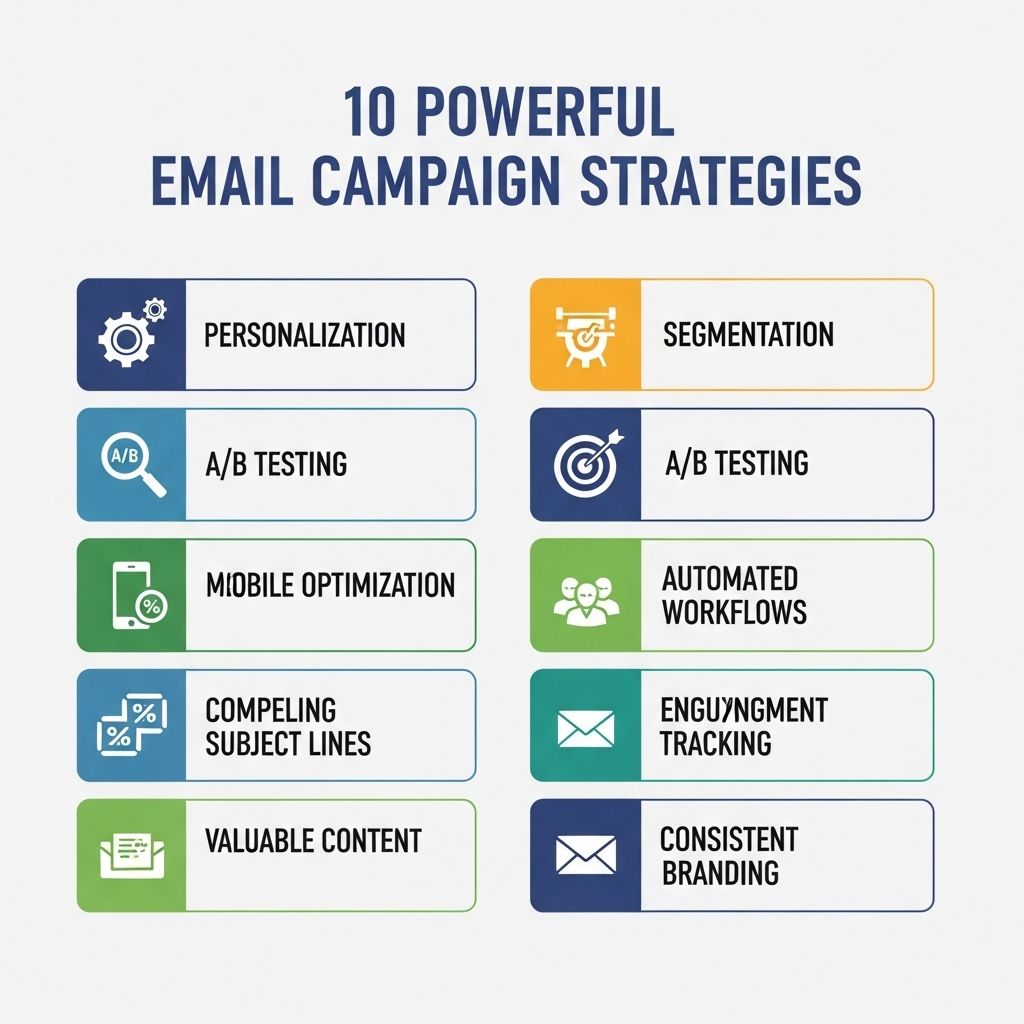
Email marketing remains one of the most effective tools for engaging audiences and driving conversions. When executed correctly, email campaigns can significantly enhance customer relationships, boost sales, and improve brand awareness. Below are ten powerful strategies that can elevate your email marketing efforts, ensuring they not only reach but also resonate with your target audience.
Email campaigns can be a game-changer for engaging your audience and driving conversions, but success requires strategic planning and execution. In this guide, we will explore 10 powerful strategies that can elevate your email marketing efforts to new heights. To enhance your overall digital presence, consider implementing these tactics alongside effective website designs as you explore more website designs.
1. Personalization
One of the most impactful strategies in email marketing is personalization. Tailoring your emails to individual recipients can substantially increase engagement rates. This includes:
- Using the recipient’s name in the subject line and body
- Segmenting your audience based on behavior and preferences
- Sending personalized product recommendations
Benefits of Personalization
Personalized emails can:
- Increase open rates by 26%
- Enhance customer satisfaction
- Drive higher conversion rates
2. A/B Testing
To optimize your email campaigns, A/B testing is essential. This involves sending two variations of an email to a small segment of your audience to determine which performs better. Key elements to test include:
- Subject lines
- Email layout
- Call-to-action buttons
- Send time
How to Conduct A/B Tests
- Choose one element to test.
- Create two versions of your email.
- Segment your audience.
- Send out the emails and analyze the results.
- Implement the winning version for the larger audience.
3. Mobile Optimization
With a significant portion of email opens occurring on mobile devices, ensuring your emails are mobile-friendly is crucial. Consider the following:
- Use responsive design so emails look good on all screen sizes.
- Optimize images and text for quick loading.
- Keep your content concise to make it easily readable on smaller screens.
Best Practices for Mobile Optimization
| Practice | Description |
|---|---|
| Short Subject Lines | Keep subject lines under 30 characters. |
| Clear Call-to-Action | Ensure buttons are large and easy to click. |
| Avoid Large Attachments | Use links instead of attachments to reduce loading time. |
4. Compelling Subject Lines
Your email’s subject line is the first impression your audience will have. To capture attention, consider:
- Creating a sense of urgency
- Asking intriguing questions
- Incorporating numbers or lists
Examples of Effective Subject Lines
- “Don’t miss out: 24-hour flash sale!”
- “Ready to upgrade? Here’s what you need to know.”
- “5 ways to maximize your productivity this week.”
5. Engaging Content
Content is the heart of your email marketing strategy. Providing valuable information will keep your audience interested and engaged. Types of content to consider include:
- Blog summaries with links to full posts
- Video tutorials or demonstrations
- Exclusive offers or discounts
Content Formatting Tips
Consider using:
- Headings and subheadings for easy navigation
- Bullet points for readability
- Images or infographics to enhance understanding
6. Clear Calls to Action
Your email should always include a clear call to action (CTA). This guides your readers on the desired next steps. Effective CTAs are:
- Action-oriented (e.g., “Shop Now”, “Join Us”)
- Visually distinct (e.g., buttons that stand out)
- Placed strategically within the email
CTA Examples
| Action | Example |
|---|---|
| Visit Website | |
| Download Resource |
7. Timing and Frequency
Finding the right time and frequency to send your emails is vital. Research indicates that:
- Emails sent on Tuesdays and Thursdays tend to have higher open rates.
- Weekly or bi-weekly campaigns are generally preferred.
How to Determine Optimal Timing
- Analyze past campaign performance data.
- Experiment with different sending times.
- Consider time zones and audience habits.
8. Automating Email Campaigns
Email automation allows you to send targeted messages automatically based on user behavior. Types of automated emails include:
- Welcome emails for new subscribers
- Abandoned cart reminders
- Re-engagement campaigns for inactive subscribers
Benefits of Email Automation
Automation helps by:
- Reducing manual effort
- Providing timely and relevant communication
- Improving customer retention rates
9. Analyzing Metrics
Tracking the performance of your email campaigns is essential for continuous improvement. Key metrics to monitor include:
- Open rates
- Click-through rates
- Conversion rates
Tools for Analyzing Email Campaigns
Consider using:
- Google Analytics for website traffic
- Email marketing platforms with built-in analytics
- Customer relationship management (CRM) systems
10. Continuous Learning and Adaptation
The digital environment is constantly evolving. Staying updated with the latest trends and best practices in email marketing is crucial. Ways to keep learning include:
- Attending webinars and workshops
- Following industry blogs and influencers
- Participating in online forums and discussions
Conclusion
Implementing these ten powerful email campaign strategies can significantly enhance your marketing efforts. By focusing on personalization, testing, optimization, and continuous learning, you can create impactful email campaigns that resonate with your audience and drive meaningful results. Whether you’re a seasoned marketer or just starting, the key is to stay adaptable and responsive to your audience’s needs.
FAQ
What are the key components of a successful email campaign?
A successful email campaign includes a targeted audience, engaging content, a compelling subject line, clear call-to-action (CTA), and effective timing for sending the emails.
How can I increase the open rates of my email campaigns?
To increase open rates, focus on writing enticing subject lines, segmenting your email list, personalizing content, and optimizing send times based on your audience’s behavior.
What is the importance of A/B testing in email marketing?
A/B testing allows marketers to compare different versions of emails to determine which elements perform better, helping to refine strategies and improve overall campaign effectiveness.
How often should I send email campaigns?
The frequency of email campaigns can vary based on your audience and industry, but it’s generally recommended to send emails consistently, such as weekly or biweekly, without overwhelming your subscribers.
What metrics should I track to measure email campaign success?
Key metrics to track include open rates, click-through rates (CTR), conversion rates, bounce rates, and unsubscribe rates to gauge the effectiveness of your email campaigns.
How can segmentation improve my email marketing efforts?
Segmentation allows you to tailor your messages to specific groups within your audience, leading to higher engagement, better targeting, and increased conversions by addressing the unique interests and needs of each segment.