As the world of decentralized finance continues to evolve, innovative play-to-earn (P2E) models are emerging, captivating crypto enthusiasts with unique opportunities. These models not only offer financial incentives but also foster community engagement and creativity within the gaming ecosystem. This article will explore several groundbreaking P2E ideas that are reshaping the landscape and providing avenues for users to earn while they play.
As the crypto landscape evolves, innovative play-to-earn ideas are emerging to engage enthusiasts and gamers alike. These concepts not only offer entertainment but also unlock new opportunities for income generation through digital assets. Check out our model selection to explore how these ideas can be effectively implemented.
Understanding the Play-to-Earn Model
The play-to-earn model revolves around the concept that players can earn real-world value through their in-game activities. Unlike traditional gaming, where players invest time and money without tangible returns, P2E games allow users to monetize their skills and time spent. This shift has opened doors for innovative gameplay mechanics and financial opportunities.
Key Features of Play-to-Earn Games
- Tokenomics: The integration of cryptocurrencies as in-game currencies or rewards.
- Non-Fungible Tokens (NFTs): Unique digital assets that represent ownership of in-game items.
- Community Governance: Players can influence game development and decision-making through voting mechanisms.
- Interoperability: Ability to use in-game assets across multiple platforms and games.
1. Virtual Real Estate Development
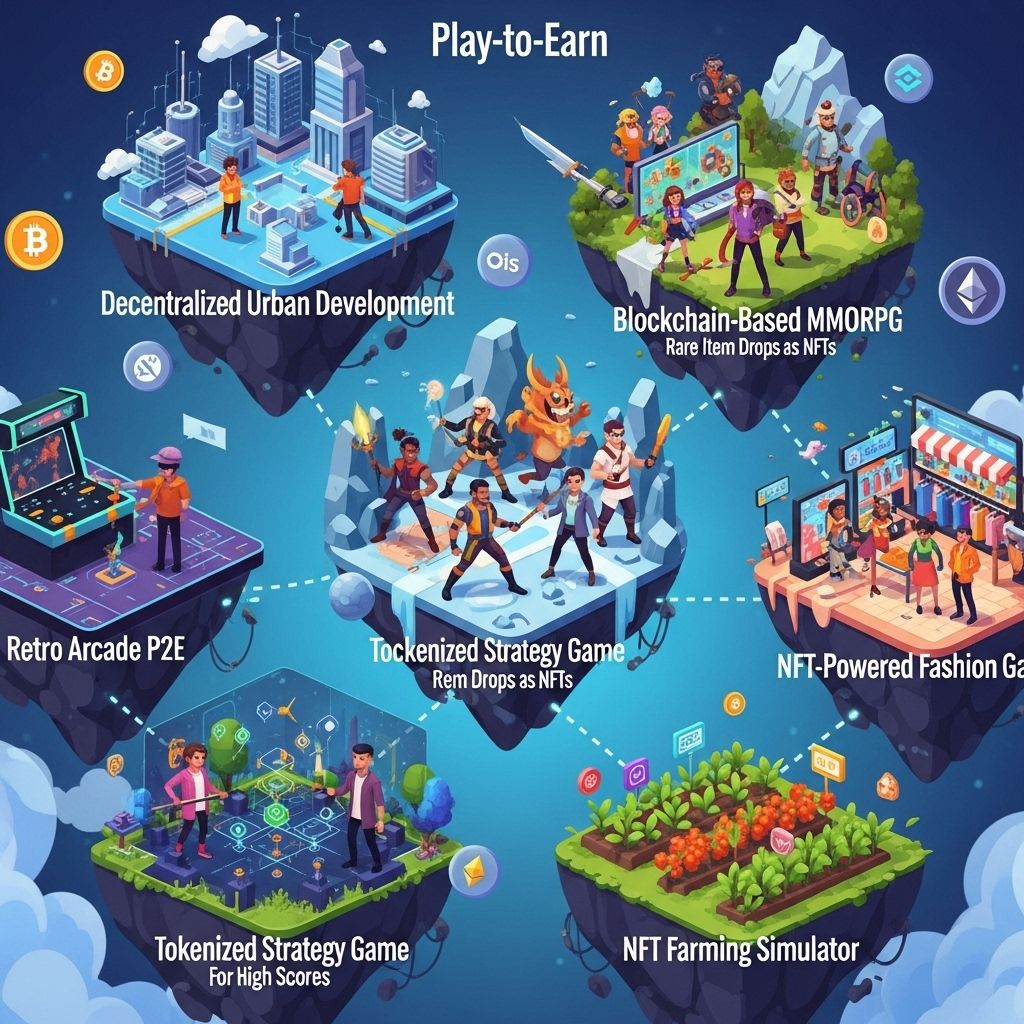
One of the most exciting concepts in the P2E space is virtual real estate development. In this model, players can buy, sell, and develop virtual land or properties within a digital world, which can significantly increase in value.
How It Works
- Players purchase virtual plots of land using cryptocurrencies.
- They can then develop these plots by creating content, building structures, or hosting events.
- As the virtual world grows in popularity, the value of the land can appreciate, allowing players to sell or lease it for profit.
Case Study: Decentraland
Decentraland is a leading example of virtual real estate where players can navigate a digital world, buy land, and build experiences ranging from galleries to virtual casinos. Players have reported selling plots for substantial profits, showcasing the potential of this model.
2. In-Game Asset Creation and Trading
Another innovative idea within the P2E ecosystem is allowing players to create and trade in-game assets, such as skins, weapons, and characters, as NFTs. This model empowers users to generate income through their creativity and skills.
The Creation Process
- Players design unique items using in-game tools or external software.
- Once created, these assets are minted as NFTs, ensuring ownership and scarcity.
- Players can list these NFTs on various marketplaces for others to buy or trade.
Benefits
This model adds a layer of economic complexity to games, encouraging creativity and offering players the chance to build their own businesses within a gaming ecosystem. It also promotes a vibrant marketplace where players can engage in trade.
3. Skill-Based Tournaments and Competitions
Skill-based tournaments are an excellent way to create a competitive environment where players can earn rewards based on their gaming skills. This model can be integrated into various genres, from first-person shooters to strategy games.
Structure of Tournaments
| Tournament Type | Entry Fee | Prize Pool |
|---|---|---|
| Single Elimination | 0.01 ETH | 1 ETH |
| Round Robin | 0.02 ETH | 2 ETH |
| Seasonal League | 0.05 ETH | 5 ETH |
Players can compete for cash prizes or in-game assets, incentivizing them to enhance their skills and engage with the community.
4. Educational Gaming Platforms
Combining education with gaming is another innovative approach to P2E. Educational gaming platforms reward users for completing courses, quizzes, and challenges. This not only provides financial incentives but also promotes learning.
Incentives for Learning
- Crypto rewards for completing lessons.
- Badges and NFTs for achievements.
- Access to premium content or courses for top performers.
Examples
Platforms like CryptoKitties and Axie Infinity have adopted educational elements, teaching players about blockchain technology while allowing them to earn as they learn.
5. Social Gaming and Community Building
Social gaming focuses on building communities through cooperative gameplay, where players can earn rewards together. This model emphasizes the social aspect of gaming, allowing players to form bonds while pursuing common objectives.
Community Engagement Strategies
- Guilds and clans that players can join to participate in group missions.
- In-game events and challenges that require teamwork.
- Reward systems that benefit both individual players and the community.
Impact on Player Experience
This model enhances player retention and satisfaction, as users feel a sense of belonging and purpose within the game. It also fosters a culture of cooperation and mutual support.
6. Environmental and Social Impact Games
Gamifying social and environmental initiatives is an emerging trend in the P2E space. These games encourage players to take real-world actions, such as planting trees or participating in community service, in exchange for rewards.
Examples of Impact Games
- Plant-for-Peace: Players earn tokens for participating in tree planting initiatives.
- Charity Run: Players complete running challenges to raise funds for various charitable organizations.
Benefits
These games not only provide earnings but also contribute positively to society, promoting awareness and action toward pressing issues like climate change and social inequity.
Conclusion
The play-to-earn model offers an array of innovative ideas that appeal to crypto enthusiasts and gamers alike. From virtual real estate development to educational platforms and social games, the opportunities to earn while playing are limitless. As technology continues to advance and blockchain adoption grows, the potential for P2E innovations will only increase, shaping the future of gaming and finance.
FAQ
What are Play-to-Earn games?
Play-to-Earn games are blockchain-based games that allow players to earn cryptocurrency or digital assets through gameplay.
How can I start earning in Play-to-Earn games?
To start earning, players typically need to invest in a game, acquire in-game assets, and participate in various gameplay activities that generate rewards.
What are some innovative Play-to-Earn concepts for crypto enthusiasts?
Innovative concepts include staking rewards for in-game achievements, cross-platform asset trading, and community-driven game development.
Are Play-to-Earn games worth the investment?
The worth of investment in Play-to-Earn games depends on market trends, the game’s popularity, and the potential for asset appreciation.
What risks should I consider with Play-to-Earn games?
Risks include market volatility, potential scams, and changes in game mechanics that may affect earning potential.