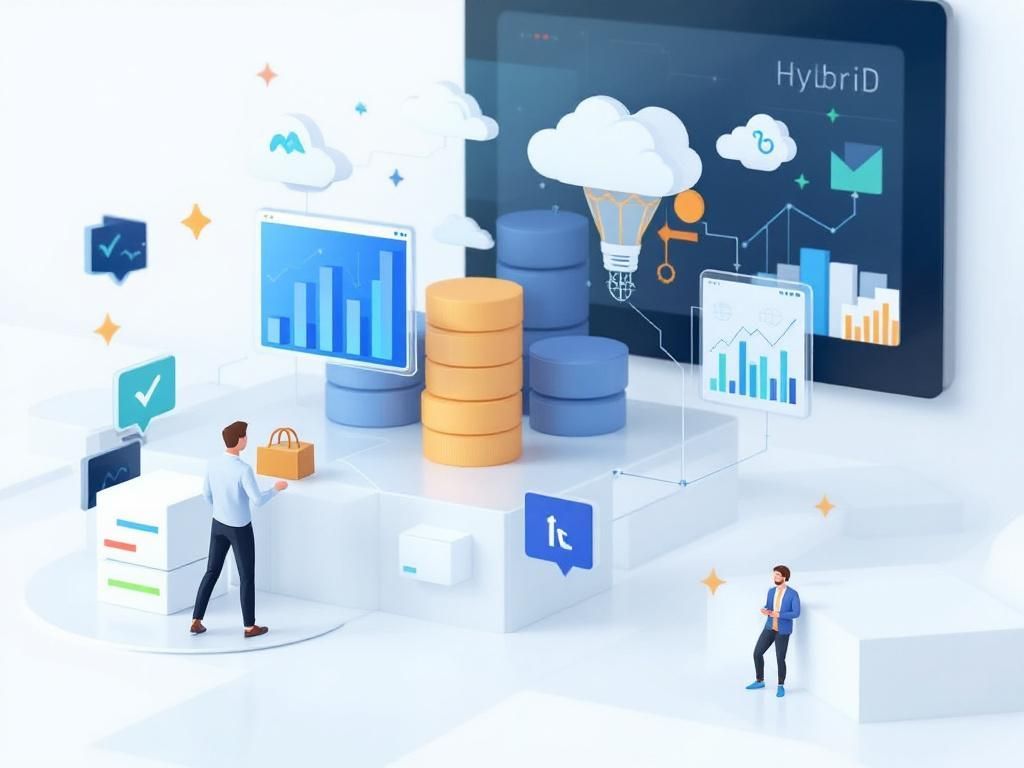
As the digital landscape continues to evolve, businesses are increasingly turning to hybrid IT solutions to stay competitive and agile. These solutions blend on-premises infrastructure with cloud computing, allowing organizations to leverage the best of both worlds. In this article, we will explore the various components of hybrid IT, its benefits, challenges, and best practices for implementation in the year 2025 and beyond.
As businesses evolve in 2025, embracing hybrid IT solutions becomes crucial for maximizing efficiency and adaptability. These solutions enable organizations to leverage both on-premises and cloud resources, addressing the diverse demands of the modern marketplace. Explore our box mockups to visualize how these innovative approaches can impact your business.
Understanding Hybrid IT
Hybrid IT refers to a computing environment that integrates private cloud, public cloud, and on-premises resources. It provides businesses with flexibility and scalability, enabling them to optimize their IT operations according to their specific needs.
The Components of Hybrid IT
- Private Cloud: Dedicated resources hosted on-premises or through a third-party provider, offering greater control and security.
- Public Cloud: Services offered over the public internet, allowing businesses to take advantage of cost-effective resources.
- On-Premises Infrastructure: Traditional data centers that support legacy applications and sensitive data.
Benefits of Hybrid IT Solutions
The adoption of hybrid IT solutions offers numerous advantages for modern businesses:
- Cost Efficiency: Organizations can scale their infrastructure dynamically based on demand, reducing unnecessary expenses.
- Flexibility: Businesses can choose the best environment for their applications, whether it’s a public cloud, private cloud, or on-premises setup.
- Enhanced Security: Sensitive data can remain on-premises while less critical workloads can move to the public cloud.
- Disaster Recovery: Hybrid solutions can improve business continuity by enabling quick recovery options.
- Improved Performance: Organizations can optimize workloads by placing them in the most appropriate environment.
Key Challenges in Hybrid IT
While there are significant benefits, there are also challenges associated with hybrid IT:
Complexity of Management
Managing multiple environments can be complicated. Organizations need to ensure seamless integration between on-premises and cloud resources.
Security Concerns
With data spread across various platforms, ensuring consistent security policies can be a challenge. Organizations must implement robust security measures across all environments.
Compliance Issues
For businesses in regulated industries, maintaining compliance with standards can be difficult when data is stored in multiple locations.
Best Practices for Implementing Hybrid IT
To successfully implement a hybrid IT strategy, organizations should consider the following best practices:
1. Assess Your Current Infrastructure
Evaluate your existing IT infrastructure to determine which components can be migrated to the cloud and which should remain on-premises.
2. Define Clear Objectives
Establish clear goals for your hybrid IT strategy, including performance metrics and expected outcomes.
3. Choose the Right Providers
Select reputable cloud service providers that align with your business needs. Consider factors such as compliance, security, and support.
4. Implement Robust Security Controls
Ensure that all data, regardless of location, is protected with strong encryption and security protocols.
5. Monitor and Optimize
Regularly monitor your hybrid IT environment to identify areas for optimization and address any performance issues promptly.
Future Trends in Hybrid IT
As we look toward 2025, several trends are emerging that will shape the future of hybrid IT:
1. Increased Automation
Automation tools will play a pivotal role in managing hybrid environments, reducing manual intervention and improving efficiency.
2. Multi-Cloud Strategies
Organizations will increasingly adopt multi-cloud strategies, utilizing services from multiple providers to avoid vendor lock-in and enhance flexibility.
3. Edge Computing Integration
With the rise of IoT devices, integrating edge computing with hybrid IT will become essential for processing data closer to the source.
Case Study: Successful Hybrid IT Implementation
Company XYZ, a leading retail organization, successfully transitioned to a hybrid IT model, achieving notable results:
| Metric | Before Hybrid IT | After Hybrid IT |
|---|---|---|
| Operational Cost | $5M | $3M |
| System Downtime | 30 hours/month | 5 hours/month |
| Data Recovery Time | 48 hours | 2 hours |
By analyzing their workloads and aligning them with the right environments, Company XYZ not only reduced costs but also improved their overall performance and customer satisfaction.
Conclusion
As businesses move towards a digital-first approach, hybrid IT solutions are set to become a cornerstone of modern IT strategies. By understanding the benefits, challenges, and best practices of hybrid IT, organizations can successfully navigate this dynamic landscape. Embracing hybrid IT will not only enhance operational efficiency but also empower businesses to innovate and respond swiftly to changing market demands.
FAQ
What are Hybrid IT solutions?
Hybrid IT solutions combine on-premises infrastructure with cloud services to create a flexible and scalable IT environment.
How can Hybrid IT benefit my business?
Hybrid IT allows businesses to optimize resources, enhance data security, and improve agility while reducing costs and maintaining control.
What are the challenges of implementing Hybrid IT?
Challenges include managing multiple environments, ensuring data security, and addressing integration issues between on-premises and cloud systems.
Is Hybrid IT suitable for all types of businesses?
Yes, Hybrid IT can be tailored to fit the needs of various businesses, from small startups to large enterprises, depending on their specific requirements.
How do I choose the right Hybrid IT solution for my business?
Selecting the right Hybrid IT solution involves assessing your business needs, evaluating service providers, and considering factors like scalability, security, and cost.
What trends should I expect in Hybrid IT by 2025?
By 2025, trends may include increased automation, enhanced security measures, and greater integration of AI and machine learning in Hybrid IT solutions.