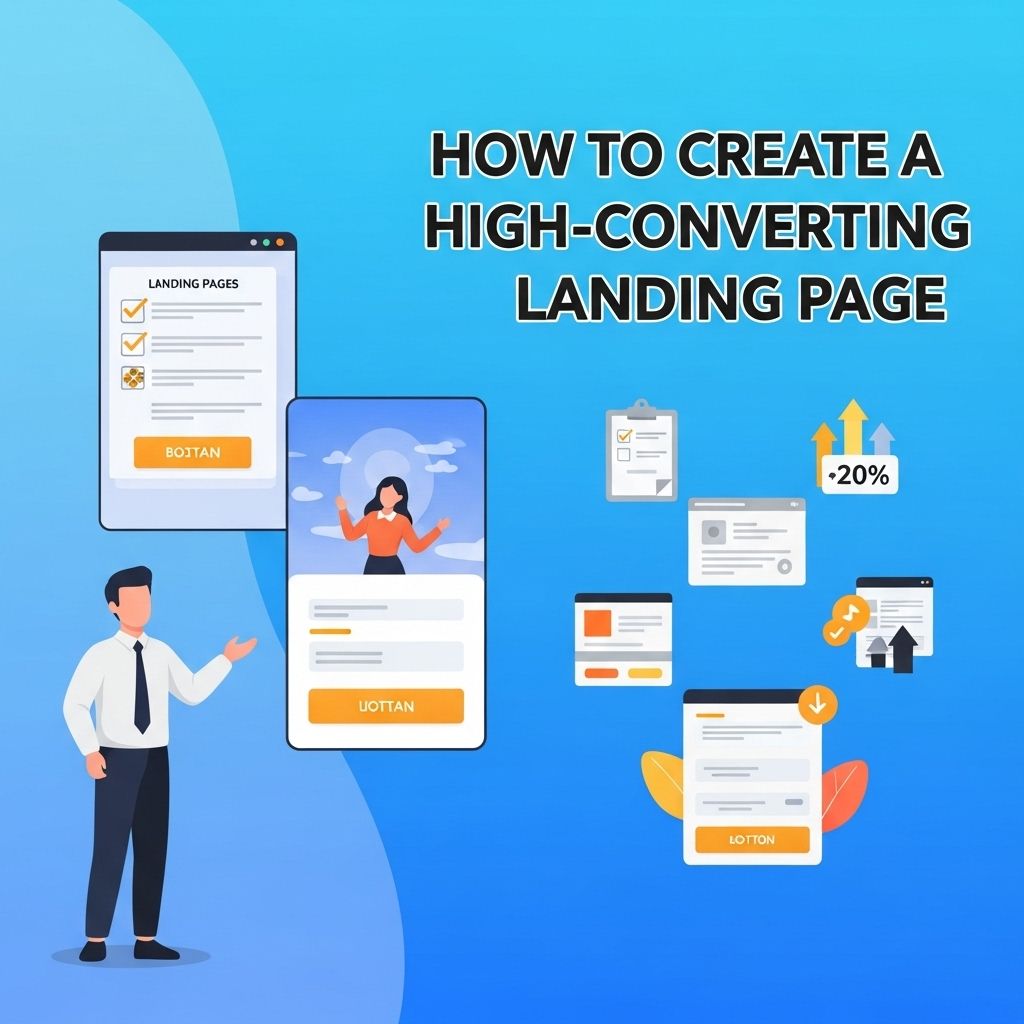
Creating a high-converting landing page is essential for any digital marketing strategy. In an era where attention spans are shorter than ever, it’s crucial to capture your audience’s interest quickly. A landing page is not just a web page; it’s a dedicated space designed to prompt a specific action from visitors. Whether your goal is to generate leads, sell products, or encourage sign-ups, understanding the components of an effective landing page can significantly boost your conversion rates.
Creating a high-converting landing page is essential for maximizing your online success. In just five steps, you can design a page that engages visitors and drives conversions effectively. For further inspiration on web aesthetics, explore more website designs.
Understanding the Purpose of a Landing Page
Before diving into the design and content aspects, it’s important to clarify the purpose of your landing page. Unlike regular web pages that may have multiple objectives, a landing page should focus on a single action. This singular focus helps maximize conversions.
Common Goals for Landing Pages
- Lead Generation
- Product Sales
- Event Registrations
- Newsletter Sign-Ups
- Free Trials or Demos
Key Elements of a High-Converting Landing Page
To craft a landing page that converts, you need to incorporate several key elements:
1. Compelling Headline
Your headline is the first thing visitors will see, so it must be catchy and relevant. A well-written headline can draw in visitors:
- Ensure clarity: Your headline should immediately convey what the page is about.
- Create urgency: Use time-sensitive language to encourage immediate action.
2. Persuasive Subheading
Complement your headline with a strong subheading that provides a little more detail about the offering. This can help to clarify benefits or features.
3. Engaging Content
Content is king. Ensure that your landing page provides engaging and relevant information. Use persuasive language and focus on how your product or service will benefit the user. Consider using:
- Bullet points for easy reading
- Images or videos to break up text and provide visual context
- Testimonials to build trust
4. Clear Call-to-Action (CTA)
Your CTA is arguably the most critical element of your landing page. It needs to be:
- Visible: Use contrasting colors to make your CTA stand out.
- Action-oriented: Use verbs that encourage action, such as “Get Started,” “Download Now,” or “Sign Up Today.”
5. Simple Form Design
If your goal involves capturing user information, keep your forms simple. Only ask for essential information to reduce friction. Longer forms can reduce conversion rates significantly.
Design Considerations
The design of your landing page is just as important as its content. Here are some design best practices:
1. Responsive Design
Make sure your landing page looks great on all devices. A responsive design ensures that users have a pleasant experience whether they are on a desktop, tablet, or mobile device.
2. A/B Testing
Remember that what works for one audience may not work for another. Conduct A/B tests to see which headlines, designs, and CTAs perform better among your target audience.
3. Minimalist Approach
A cluttered landing page can distract visitors. Embrace a minimalist design that focuses on the essential elements. Here are some tips:
- Limit the number of images and videos
- Use white space effectively
- Avoid excessive text
Using Analytics to Measure Success
Once your landing page is live, you’ll want to track its performance. Key metrics to pay attention to include:
| Metric | Description |
|---|---|
| Conversion Rate | Percentage of visitors who complete the desired action |
| Bounce Rate | Percentage of visitors who leave without interacting |
| Average Time on Page | How long visitors stay on your page |
| Click-Through Rate (CTR) | Percentage of visitors who click your CTA |
Enhancing Trust and Credibility
Building trust is essential for improved conversion rates. Here are some tips to enhance credibility:
1. Use Testimonials
Consider including testimonials or case studies to showcase real-life success stories. This social proof can be a powerful persuader.
2. Display Trust Badges
Adding trust badges can reassure visitors about security and reliability. Common badges include:
- SSL Certification
- Payment Processor Logos
- Industry Awards or Recognitions
Conclusion
Creating a high-converting landing page is not a one-size-fits-all task. It requires a deep understanding of your audience, continual testing, and strategic design and content decisions. By focusing on the key elements outlined in this article, you can develop landing pages that not only attract visitors but convert them into loyal customers.
FAQ
What elements are essential for a high-converting landing page?
A high-converting landing page should include a compelling headline, clear call-to-action (CTA), engaging visuals, concise copy, and social proof elements such as testimonials or reviews.
How important is the design of a landing page for conversions?
The design of a landing page is crucial for conversions as it affects user experience; a clean, professional design with easy navigation encourages visitors to stay longer and engage with your content.
What role does copywriting play in landing page effectiveness?
Effective copywriting is vital for a landing page; it should communicate your value proposition clearly, address the audience’s pain points, and include persuasive language to motivate visitors to take action.
How can I improve the loading speed of my landing page?
To improve loading speed, optimize images, minimize HTTP requests, use browser caching, and consider a Content Delivery Network (CDN) to enhance performance for users.
Should I A/B test my landing page?
Yes, A/B testing your landing page is crucial to understand what elements perform best; testing different headlines, CTAs, and layouts can lead to significant improvements in conversion rates.