

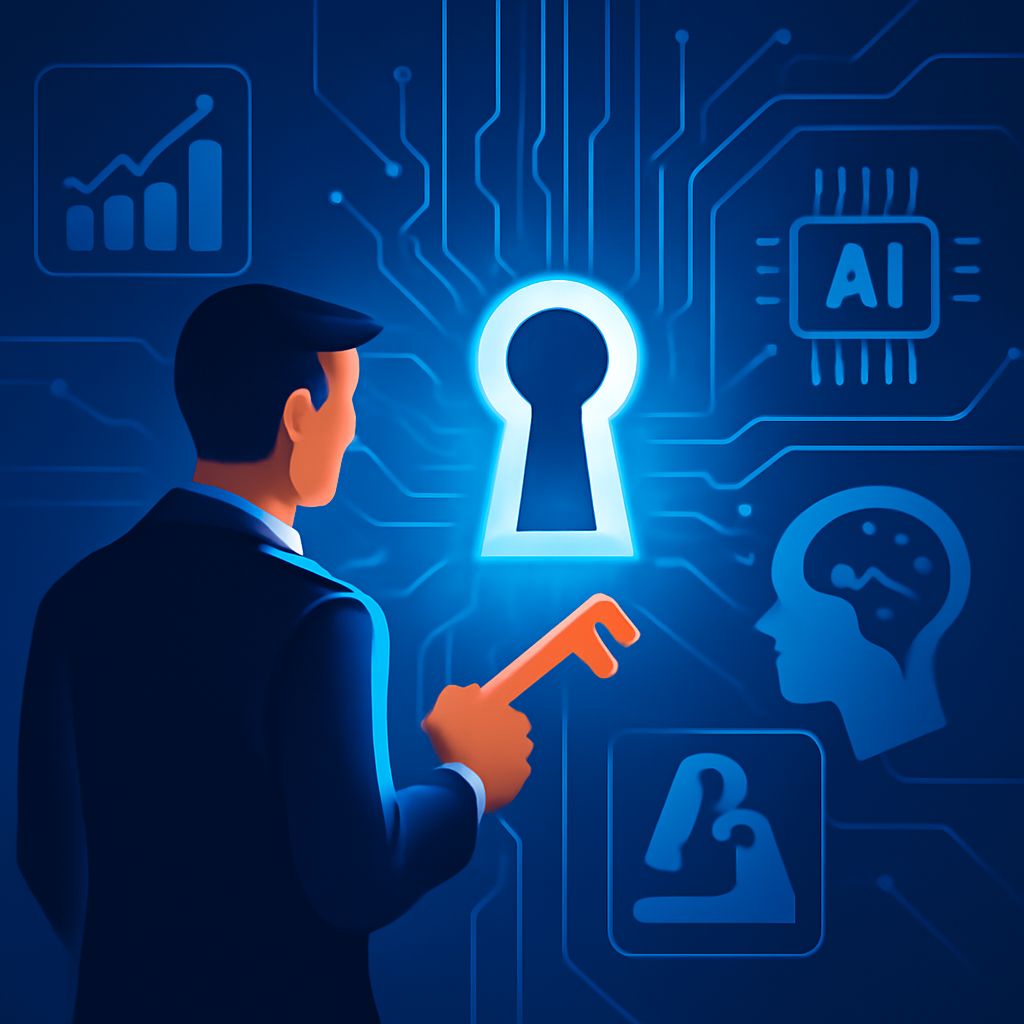
Introduction to AI’s Transformative Role
Artificial Intelligence (AI) has become a cornerstone of modern technology, driving innovation and revolutionizing various sectors. From healthcare to finance, AI tools are making operations more efficient, enabling informed decision-making, and paving the way for unprecedented growth. This article delves into some of the groundbreaking AI tools that are shaping the future of industries, touching on healthcare, finance, manufacturing, and more.
Unlocking the potential of innovative AI tools is transforming industries at an unprecedented pace. From streamlining workflows to enhancing decision-making, these technologies are redefining how businesses operate. Explore how these advancements are reshaping strategies and driving efficiencies in the full spectrum of sectors, showcased in stunning professional brochure mockups.
AI in Healthcare: A New Horizon
One of the most significant impacts of AI is being witnessed in the healthcare industry. AI tools are leading to faster diagnoses, personalized medicine, and streamlined operations. For instance, predictive analytics powered by AI can anticipate patient outcomes, thus improving treatment plans and reducing hospital readmissions. Moreover, AI’s influence extends beyond patient care into pharmaceuticals, where algorithms are expediting drug discovery processes. This innovation drastically cuts down the time and cost associated with bringing new drugs to market, which can potentially save millions of lives.
- AI-Powered Diagnostics: Tools like ImageNet leverage machine learning algorithms to analyze medical images, enhancing diagnostic accuracy for conditions such as cancer and other complex diseases. These technologies reduce human error and allow for faster turnaround times, enabling doctors to treat patients more effectively.
- Robotic Process Automation (RPA): Automating mundane tasks, RPA allows healthcare professionals to focus on more critical responsibilities, fostering a more patient-centric approach. By automating tasks like patient scheduling and billing, hospitals can use their staff more efficiently and reduce overhead costs.
- Virtual Health Assistants: Applications like Babylon Health provide round-the-clock monitoring and personalized health advice, improving patient engagement and health outcomes. These virtual assistants are equipped to handle queries about symptoms and medication, offering users convenience and reassurance when they need it most.
Enhancing Financial Services with AI
The financial sector has also embraced AI, transforming risk management, customer service, and fraud detection processes. AI tools are helping institutions navigate complex data landscapes with unprecedented speed and accuracy, leading to smarter investment strategies and enhanced customer experiences. The implementation of AI in banking not only improves the efficiency of operations but also enhances accuracy in financial forecasting and planning, providing deeper insights into customer needs and preferences.
AI solutions like sentiment analysis tools scrape social media and news articles, providing insights into market trends that guide investment decisions. Moreover, chatbots powered by natural language processing (NLP) offer personalized financial advice to customers, enhancing user satisfaction and retention. These chatbots are available 24/7, providing real-time assistance, which significantly boosts the level of service available to customers and frees up human resources for more complex inquiries.
Manufacturing Sector’s Shift with AI
In manufacturing, AI has been instrumental in optimizing supply chains, enhancing quality control, and driving innovation. Machines equipped with AI can predict maintenance needs, reducing downtime and increasing productivity. AI-powered systems allow manufacturers to track the entire production process, ensuring that products meet stringent quality standards while minimizing waste and resource consumption. This not only improves operational efficiency but also supports sustainability goals critical in today’s business environment.
- Quality Assurance: AI systems use vision inspection technology to detect defects at a minute level, ensuring product quality surpasses industry standards. This technology reduces the reliance on human inspection, which can be prone to errors and inconsistencies.
- Supply Chain Optimization: By utilizing AI for demand forecasting, manufacturers can adapt to changes swiftly, minimizing waste and increasing efficiency. AI tools can analyze large datasets to predict market demands accurately, enabling companies to scale production up or down accordingly, thus avoiding excess supply or shortages.
AI’s Role in Education and Learning
AI is not only thriving in sectors like healthcare, finance, and manufacturing but is also shaping the future of education and learning. It has opened new avenues for personalized learning experiences, tailored to meet individual student needs. AI-driven platforms can evaluate student performance and adapt content delivery to optimize learning outcomes, ensuring every student reaches their fullest potential.
- Personalized Learning: AI systems tailor the learning materials to the pace and style of the learner, ensuring an engaging and effective educational journey. Tools like adaptive learning platforms adjust in real-time based on a student’s progress, offering targeted exercises to help them master challenging concepts.
- Automated Administrative Tasks: AI can handle routine tasks such as grading papers and managing schedules, freeing educators to focus on teaching and mentorship. This support enhances the role of teachers, allowing them to spend more time with students on creative and interactive methods of instruction.
- Virtual Tutors: AI-powered tutoring systems provide students with additional support outside of regular classroom hours, offering personalized guidance and feedback on assignments. These tools help bridge learning gaps and offer immediate assistance, fostering a supportive educational environment.
The Growing Field of Autonomous Vehicles
AI is at the heart of the development and operation of autonomous vehicles, equipped with complex algorithms that allow these cars to navigate without human intervention. This technology promises to transform transportation, reducing traffic accidents caused by human error and creating more efficient logistics networks. As AI technology advances, it could lead to more environmentally friendly modes of transportation, with smarter routing and more efficient fuel use.
- Self-Driving Technology: AI algorithms allow vehicles to interpret data from sensors and cameras, enabling them to make real-time driving decisions. These autonomous systems are getting better at navigating complex environments, even in challenging weather conditions.
- Improved Public Transport: AI is also being integrated into public transportation systems to predict delays and optimize routes, enhancing the efficiency of buses and trains. This results in more reliable service and improved experiences for commuters.
- Fleet Management: In supply chain and logistics, AI tools enhance fleet efficiency by optimizing routes, predicting vehicle maintenance, and improving load management. This leads to cost savings and increased reliability in cargo transport.
FAQ
What are some innovative AI tools used in these industries?
Industries widely use tools like IBM Watson for data analysis, TensorFlow for machine learning processes, and H2O.ai for predictive analytics. These powerful AI platforms enable businesses to harness massive amounts of data, making it easier to extract actionable insights and drive strategic initiatives.
How does AI improve decision-making?
AI improves decision-making by analyzing large sets of data to identify patterns and trends, which human analysts might overlook, leading to more accurate predictions and strategies. By providing a deeper understanding of the data, AI empowers businesses to make informed choices quickly, which is crucial for staying competitive in dynamic markets.
What are the ethical considerations with AI use?
Key ethical considerations include data privacy, the potential for bias in AI algorithms, and the displacement of jobs due to automation. As AI becomes more integrated into daily operations, it’s paramount to address these concerns by implementing transparent data policies, using diverse datasets to train AI systems, and upskilling the workforce to adapt to an AI-rich environment.



