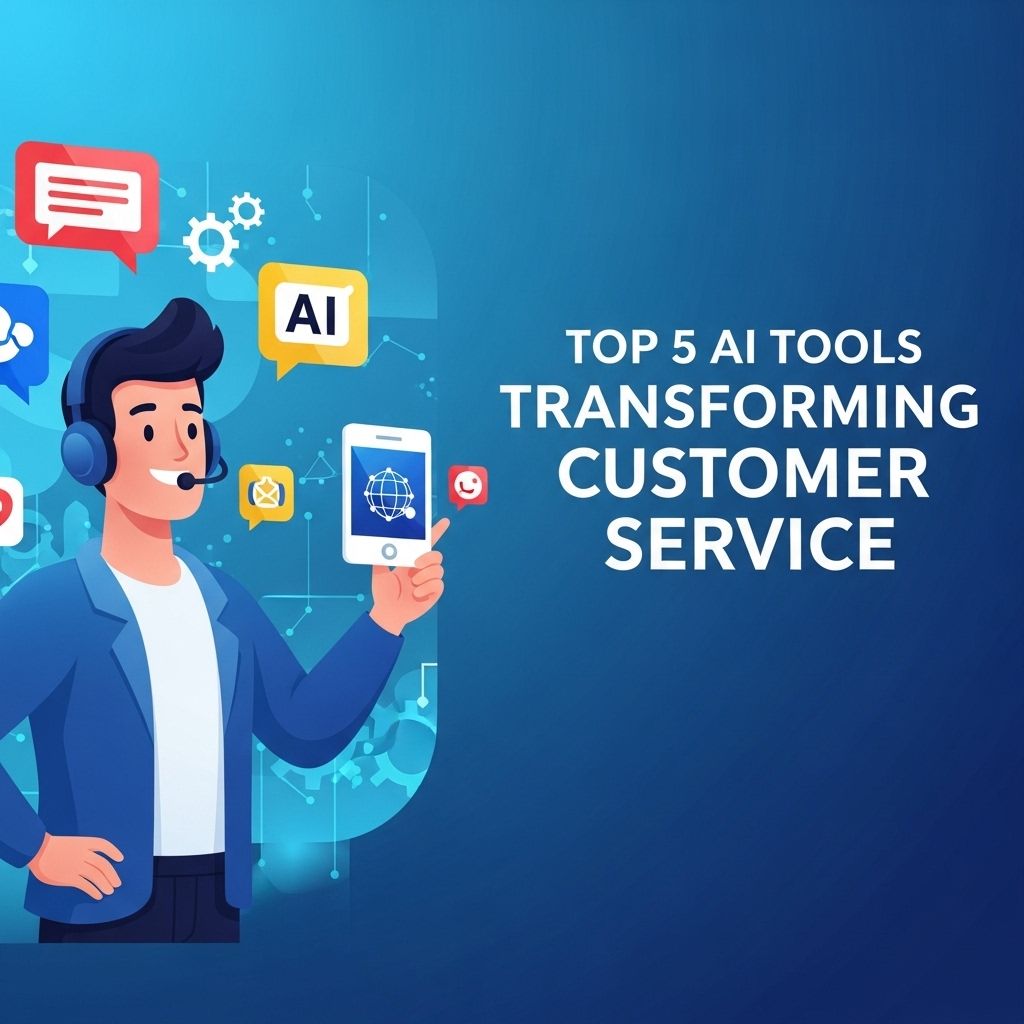
In today’s fast-paced digital landscape, customer service is evolving at an unprecedented rate. Companies are constantly looking for innovative ways to enhance customer experience, streamline processes, and increase satisfaction. Artificial Intelligence (AI) has emerged as a game changer in this realm, offering tools that not only automate but also enhance the way businesses interact with their customers. In this article, we will explore five leading AI tools that are transforming customer service, examining their features, benefits, and the impact they have on both businesses and consumers.
In today’s competitive landscape, businesses are harnessing cutting-edge AI tools to revolutionize customer service. From chatbots that provide instant support to analytics tools that personalize customer experiences, these innovations are significantly enhancing customer interactions. To see how design can also elevate customer engagement, explore full wrap mug options.
1. Chatbots
Chatbots have become ubiquitous in the customer service sector. These AI-powered tools simulate conversations with users through text or voice interactions. They can handle a myriad of inquiries, ranging from FAQs to complex service requests.
Key Features of Chatbots
- 24/7 Availability: Chatbots can operate around the clock, providing immediate assistance at any time of the day.
- Quick Response Time: Automated responses to common queries allow for instant support, reducing wait times.
- Personalization: Advanced chatbots can analyze customer data to tailor responses and recommendations.
Benefits
- Improved customer satisfaction due to quick resolution of inquiries.
- Reduced operational costs by minimizing the need for human agents.
- Enhanced data collection for further analysis of customer behavior and preferences.
2. AI-Powered Helpdesk Solutions
AI-powered helpdesk tools such as Zendesk and Freshdesk leverage machine learning to enhance ticket resolution processes. These platforms analyze customer inquiries and automatically categorize, prioritize, and route tickets to the appropriate department or agent.
Core Capabilities
| Feature | Description |
|---|---|
| Automation | Automated ticket creation and categorization based on keywords and customer data. |
| Sentiment Analysis | AI assesses customer sentiment from communications to prioritize urgent issues. |
| Knowledge Base Integration | Integration with existing knowledge bases for efficient self-service support. |
Advantages
- Faster response times enhance customer experiences.
- Minimized human error through automated processes.
- Data insights to identify trends and improve service quality.
3. Voice Assistants
Voice assistants such as Alexa and Google Assistant are increasingly being utilized in customer service to facilitate voice interactions. Businesses are integrating these technologies to allow customers to resolve issues or place orders using simple voice commands.
Impact on Customer Experience
- Accessibility: Voice interactions make it easier for customers with disabilities to access services.
- Convenience: Customers can multitask while engaging with voice assistants, creating a seamless experience.
- Natural Language Processing: These assistants can understand complex queries and respond naturally.
4. Predictive Analytics Tools
Predictive analytics tools, powered by AI, help businesses anticipate customer needs and behaviors. By analyzing past interactions and customer data, these tools can forecast future trends, enabling proactive customer service.
How Predictive Analytics Works
- Data Collection: Gathering data from various customer touchpoints.
- Analysis: Using AI algorithms to identify patterns and trends in customer behavior.
- Action: Implementing strategies based on predictions to enhance customer engagement.
Benefits
- Reduced churn rates by addressing potential issues before they escalate.
- Increased sales through targeted marketing efforts based on predicted interests.
- Improved resource allocation by understanding peak service demands.
5. Customer Feedback Analysis Tools
Customer feedback analysis tools leverage AI to collect and interpret customer feedback efficiently. Platforms like Qualtrics and Medallia analyze survey responses and social media comments to gauge customer satisfaction and service effectiveness.
Features
- Sentiment Tracking: Analyze customer emotions and attitudes towards products or services.
- Trend Analysis: Identify common themes in customer feedback over time.
- Real-Time Insights: Access immediate feedback to make quick decisions on service improvements.
Advantages
- Enhanced customer satisfaction by understanding and addressing concerns.
- Data-backed decision-making for strategic planning.
- Fostering customer loyalty through responsive service improvements.
Conclusion
As the customer service landscape continuously shifts towards automation and AI integration, businesses must adapt to remain competitive. The AI tools outlined above are leading the charge in transforming customer interactions, fostering better relationships, and enhancing overall service efficiency. By leveraging these innovative solutions, companies not only improve their operations but also significantly boost customer satisfaction, paving the way for long-term success in an increasingly digital world.
FAQ
What are the top AI tools for customer service in 2023?
The top AI tools for customer service in 2023 include chatbots like Zendesk Chat, virtual assistants like Intercom, AI-driven analytics tools like Salesforce Einstein, voice recognition software like Google Cloud Speech-to-Text, and customer feedback tools like Qualtrics.
How can AI tools improve customer service efficiency?
AI tools can improve customer service efficiency by automating responses to common inquiries, providing 24/7 support, analyzing customer data for better insights, and enabling faster response times, which enhances overall customer satisfaction.
What are the benefits of using AI chatbots in customer service?
AI chatbots in customer service offer benefits such as reduced operational costs, immediate responses to customer queries, a personalized user experience, and the ability to handle multiple inquiries simultaneously, leading to improved service quality.
Can AI tools help in managing customer feedback?
Yes, AI tools can help manage customer feedback by analyzing sentiment, categorizing responses, and providing actionable insights that businesses can use to improve their products and services.
Are AI tools capable of understanding complex customer queries?
Yes, advanced AI tools are capable of understanding complex customer queries through natural language processing (NLP), enabling them to provide accurate and relevant responses, thus enhancing the customer experience.