

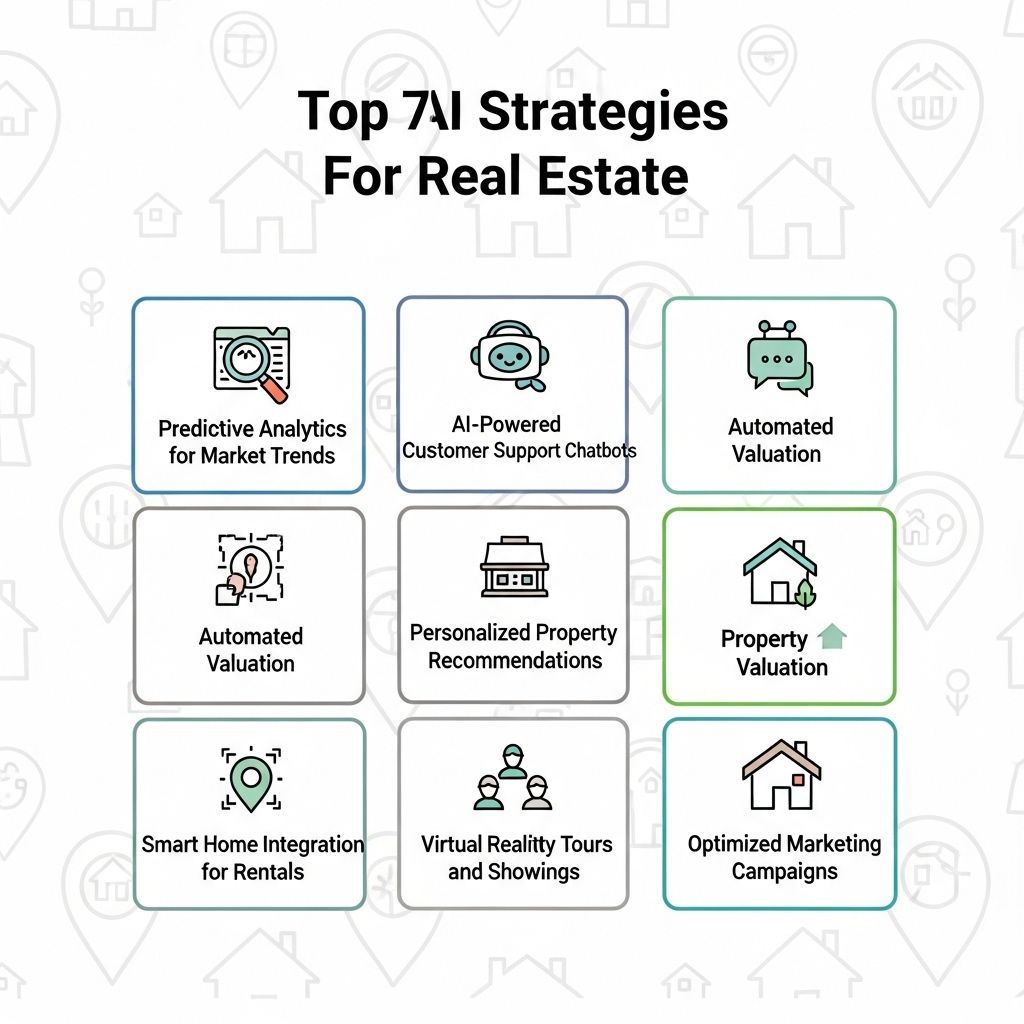
The intersection of artificial intelligence and real estate is transforming how professionals operate within the industry. With AI continuing to evolve, real estate agents, investors, and developers are leveraging advanced technologies to streamline processes, enhance customer interactions, and make data-driven decisions. In this article, we will explore the most effective AI strategies that are reshaping the real estate landscape and providing a competitive edge.
As the real estate industry evolves, artificial intelligence emerges as a game-changer, reshaping the way properties are bought, sold, and managed. From predictive analytics to automated customer service, the top seven AI strategies are redefining market dynamics and enhancing decision-making processes. For those interested in understanding these innovations more deeply, Look at our featured models.
1. Predictive Analytics for Market Trends
Predictive analytics is one of the most powerful applications of AI in real estate. By analyzing vast amounts of historical and current data, AI algorithms can forecast market trends, property values, and investment opportunities. This allows real estate professionals to make informed decisions and mitigate risks effectively.
Key Benefits:
- Better investment decisions
- Identification of emerging markets
- Reduced risks through data-driven forecasts
2. Chatbots for Customer Service
Implementing AI-driven chatbots can significantly enhance customer service in real estate. These chatbots can be programmed to respond to inquiries, showcase properties, and schedule viewings, all while providing a 24/7 service to potential buyers and renters.
Advantages of Chatbots:
- Immediate responses to inquiries
- Increased operational efficiency
- Improved customer satisfaction
3. Virtual Tours and Augmented Reality
With advancements in virtual reality (VR) and augmented reality (AR), real estate agents can offer immersive property tours. This technology allows potential buyers to explore properties remotely, reducing the need for physical visits and expanding the market reach.
Benefits of VR and AR:
| Benefit | Description |
|---|---|
| Time-saving | Buyers can view multiple properties in less time. |
| Enhanced engagement | Interactive experiences can captivate potential buyers. |
| Reduced costs | Less travel needed for both agents and clients. |
4. AI for Property Management
AI-powered property management tools can automate routine tasks such as tenant screening, maintenance requests, and lease renewals. This automation helps property managers save time and focus on more strategic initiatives.
Key Features of AI in Property Management:
- Automated tenant screening using AI algorithms to assess applications
- Predictive maintenance to foresee potential issues before they arise
- Streamlined communications through automated messaging systems
5. Smart Home Technology Integration
As smart home technology gains popularity, integrating AI into homes is becoming increasingly relevant. AI can optimize energy consumption, enhance security, and improve overall living conditions for tenants and homeowners.
Integration Benefits:
- Increased property value due to modern smart features
- Improved tenant satisfaction through enhanced convenience
- Energy savings and sustainability initiatives
6. AI for Investment Analysis
Investors can utilize AI to analyze potential real estate investments. By processing data on market conditions, property history, and economic indicators, AI tools can help investors identify the best opportunities for profitable investments.
Investment Analysis Tools:
- Market analysis algorithms that predict future performance
- Property valuation models based on multiple variables
- Risk assessment frameworks using historical performance data
7. Enhanced Marketing Strategies
AI can significantly optimize marketing efforts for real estate. By analyzing consumer behavior and preferences, AI tools can help create targeted advertising campaigns that resonate with potential buyers.
Effective Marketing Tactics:
| Tactic | Description |
|---|---|
| Personalized content | Customized messages based on user data and behavior. |
| Predictive customer targeting | Using AI to predict which leads are most likely to convert. |
| Social media optimization | Automated posting and engagement strategies. |
Conclusion
AI is undoubtedly revolutionizing the real estate sector, offering innovative solutions that enhance efficiency and customer experience. By embracing these AI strategies, real estate professionals can stay ahead of the curve and achieve substantial growth in an increasingly competitive environment. The integration of technology will not only streamline operations but also lead to more informed decision-making and improved client relationships in the ever-evolving real estate market.
FAQ
What are the top AI strategies for real estate in 2023?
The top AI strategies for real estate in 2023 include predictive analytics for market trends, chatbots for customer service, automated property valuations, AI-driven marketing personalization, virtual property tours, and enhanced property management through IoT integration.
How can predictive analytics improve real estate investment decisions?
Predictive analytics can analyze historical data and market trends to forecast property values and rental income, helping investors make informed decisions on where to buy and when to sell.
What role do chatbots play in real estate customer service?
Chatbots can assist in real estate by providing instant responses to inquiries, scheduling property viewings, and offering personalized property recommendations, enhancing customer engagement.
How does AI help with automated property valuations?
AI algorithms can analyze various factors such as location, property condition, and market trends to provide accurate and timely property valuations, making the buying and selling process more efficient.
What benefits do virtual property tours offer to real estate agents?
Virtual property tours allow prospective buyers to view properties remotely, saving time and resources for both agents and clients, while also expanding the market reach to out-of-town buyers.
How can AI improve property management in real estate?
AI can streamline property management by automating routine tasks, predicting maintenance needs, and optimizing rental pricing based on market dynamics, leading to increased efficiency and tenant satisfaction.



