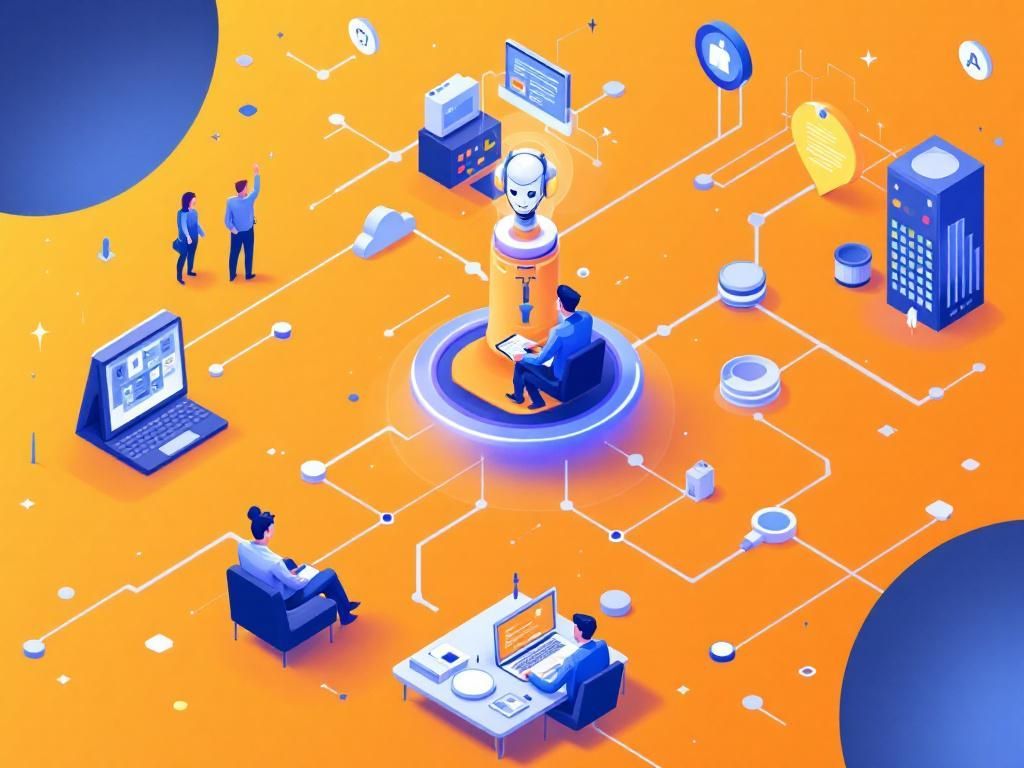
In the rapidly evolving landscape of technology, organizations are continually seeking ways to enhance their operational efficiency and service delivery. Among the myriad of advancements, Artificial Intelligence (AI) has emerged as a powerful catalyst for transforming IT Service Management (ITSM). The integration of AI into ITSM not only streamlines processes but also empowers IT teams to deliver superior service to end-users.
In the ever-evolving landscape of IT service management, Artificial Intelligence (AI) plays a pivotal role in streamlining operations and enhancing efficiency. By automating routine tasks and providing insights through data analysis, AI empowers IT teams to focus on strategic initiatives that drive business value. For a deeper understanding of how AI can be integrated into your workflow, View our latest model mockups to explore innovative design solutions.
Understanding AI in IT Service Management
AI in IT Service Management refers to the application of machine learning, natural language processing, and other AI technologies to automate and improve IT service delivery. These technologies can handle repetitive tasks, analyze large sets of data, and provide actionable insights. Below, we explore how AI can revolutionize ITSM.
Key Features of AI in ITSM
- Automation: Automating routine tasks such as ticketing, incident resolution, and user queries reduces workload on IT staff.
- Predictive Analytics: AI can analyze historical data to predict potential issues before they arise, allowing for proactive management.
- Enhanced User Experience: AI-driven chatbots provide immediate assistance to users, improving satisfaction and reducing response times.
- Data-Driven Insights: AI processes large volumes of data, generating insights that help in decision-making and strategic planning.
Advantages of Implementing AI in ITSM
The integration of AI into ITSM offers a range of benefits that can significantly impact an organization’s efficiency and service quality. Here are some of the most notable advantages:
1. Increased Efficiency
By automating routine tasks, IT teams can focus on more strategic activities. This shift not only improves efficiency but also enhances job satisfaction among staff.
2. Cost Reduction
AI minimizes the need for extensive human resources by automating processes, which can lead to significant cost savings for businesses. According to a recent study, organizations adopting AI in ITSM have seen operational costs drop by up to 30%.
3. Improved Accuracy
With machine learning algorithms, AI can minimize human error by providing accurate data analysis and decision-making. This reliability is crucial for maintaining service quality.
4. Scalability
AI systems are highly scalable, allowing organizations to adjust their IT service management processes as the company grows without a proportionate increase in costs or resources.
Challenges in AI Implementation for ITSM
Despite the numerous benefits, organizations face challenges when integrating AI into their ITSM systems. Recognizing these challenges is vital for a smooth transition.
Data Quality and Availability
AI systems require high-quality data to function effectively. Poor data quality can lead to inaccurate predictions and insights. Organizations must invest in data cleansing and management strategies to ensure their AI models are trained with reliable information.
Change Management
Employees may resist transitioning to AI-driven processes due to fear of job displacement or lack of understanding of new technologies. Effective change management strategies, including training and communication, are crucial to overcoming this resistance.
Integration with Existing Systems
Integrating AI with legacy IT systems can be complex and may require substantial investment. Organizations must assess their existing infrastructure and make necessary upgrades to support AI technologies.
Best Practices for Successful AI Integration
To maximize the benefits of AI in ITSM, organizations should adhere to best practices during implementation:
1. Define Clear Objectives
Before implementing AI, organizations should establish clear goals and metrics to measure success. This clarity enables teams to align their efforts and understand the impact of AI on ITSM.
2. Start Small
Instead of a full-scale implementation, organizations should consider piloting AI solutions in specific areas to assess effectiveness and gather feedback.
3. Invest in Training
Providing training for IT staff on AI tools and technologies is essential. Well-informed employees will be more likely to embrace the changes and utilize AI to its fullest potential.
4. Monitor and Evaluate
Continuously monitor the performance of AI systems and evaluate their impact on ITSM processes. Regular assessments allow organizations to make necessary adjustments and improvements.
Case Studies of AI in ITSM
Real-world examples illustrate how organizations have successfully implemented AI in their IT service management processes.
Case Study: Company A
Company A, a global technology firm, integrated an AI chatbot into their service desk operations. The chatbot handled over 70% of user queries, leading to a 40% reduction in resolution times and improving user satisfaction scores by 25%.
Case Study: Company B
Company B leveraged predictive analytics to identify recurring issues in their IT infrastructure. By addressing these problems proactively, they reduced incident volume by 30%, allowing their IT team to focus on more critical projects.
The Future of AI in ITSM
As AI technology continues to advance, its role in ITSM is expected to expand significantly. Future developments may include:
1. Advanced Natural Language Processing
More sophisticated NLP will enhance chatbots and virtual agents, allowing for more natural interactions with users.
2. Enhanced Predictive Capabilities
AI will continue to improve its predictive capabilities, enabling organizations to anticipate issues with even greater accuracy and speed.
3. AI-Driven Decision Making
Future AI systems may assist in making strategic IT decisions, analyzing a broader set of variables to support risk management and resource allocation.
Conclusion
In conclusion, the integration of AI into IT service management is not just a trend but a fundamental shift that organizations must embrace to remain competitive. While challenges exist, the benefits of implementing AI solutions far outweigh the obstacles. By following best practices and learning from successful case studies, organizations can leverage AI to enhance service delivery, improve operational efficiency, and drive overall business success.
FAQ
How can AI improve IT service management?
AI can enhance IT service management by automating routine tasks, improving ticket resolution times, and providing predictive analytics to anticipate service disruptions.
What are the benefits of using AI in IT support?
The benefits of using AI in IT support include increased efficiency, reduced operational costs, enhanced user satisfaction, and the ability to analyze large volumes of data for better decision-making.
Can AI help in incident management?
Yes, AI can assist in incident management by automatically categorizing and prioritizing incidents, suggesting solutions based on historical data, and even resolving common issues without human intervention.
What role does machine learning play in IT service management?
Machine learning plays a crucial role in IT service management by enabling systems to learn from past incidents and improve their responses over time, leading to faster and more accurate service delivery.
How does AI enhance user experience in IT services?
AI enhances user experience in IT services by providing instant support through chatbots, personalizing service interactions based on user behavior, and ensuring quicker resolution times for service requests.
What challenges come with implementing AI in IT service management?
Challenges of implementing AI in IT service management include data privacy concerns, the need for high-quality data, potential resistance from staff, and ensuring AI systems are properly trained and integrated into existing workflows.