Investing can seem intimidating, especially if you’re starting with a modest amount like $5,000. However, with the right strategy and approach, you can create a diversified portfolio that not only protects your capital but also has the potential for growth. In this article, we will explore essential steps and tips for building a $5,000 investment portfolio that aligns with your financial goals.
Building a $5,000 investment portfolio today can set the foundation for your financial future. With the right strategy and understanding of various asset classes, you can create a diversified portfolio that aligns with your risk tolerance and goals. To get started, discover helpful tips that can guide your investment decisions.
Understanding Your Financial Goals
Before diving into investments, it’s crucial to define your financial goals. This will guide your investment decisions and risk tolerance. Ask yourself:
- What is my investment time horizon?
- Am I looking for growth, income, or both?
- How much risk am I willing to take?
Assessing Risk Tolerance
Your risk tolerance is a key factor in determining how to allocate your investment portfolio. Here are the common categories:
1. Conservative
A conservative investor prioritizes capital preservation and prefers low-risk investments.
2. Moderate
This type of investor seeks a balance between risk and return, willing to accept some volatility for greater gains.
3. Aggressive
Aggressive investors are comfortable with high risk and aim for maximum returns, understanding the potential for losses.
Building a Diversified Portfolio
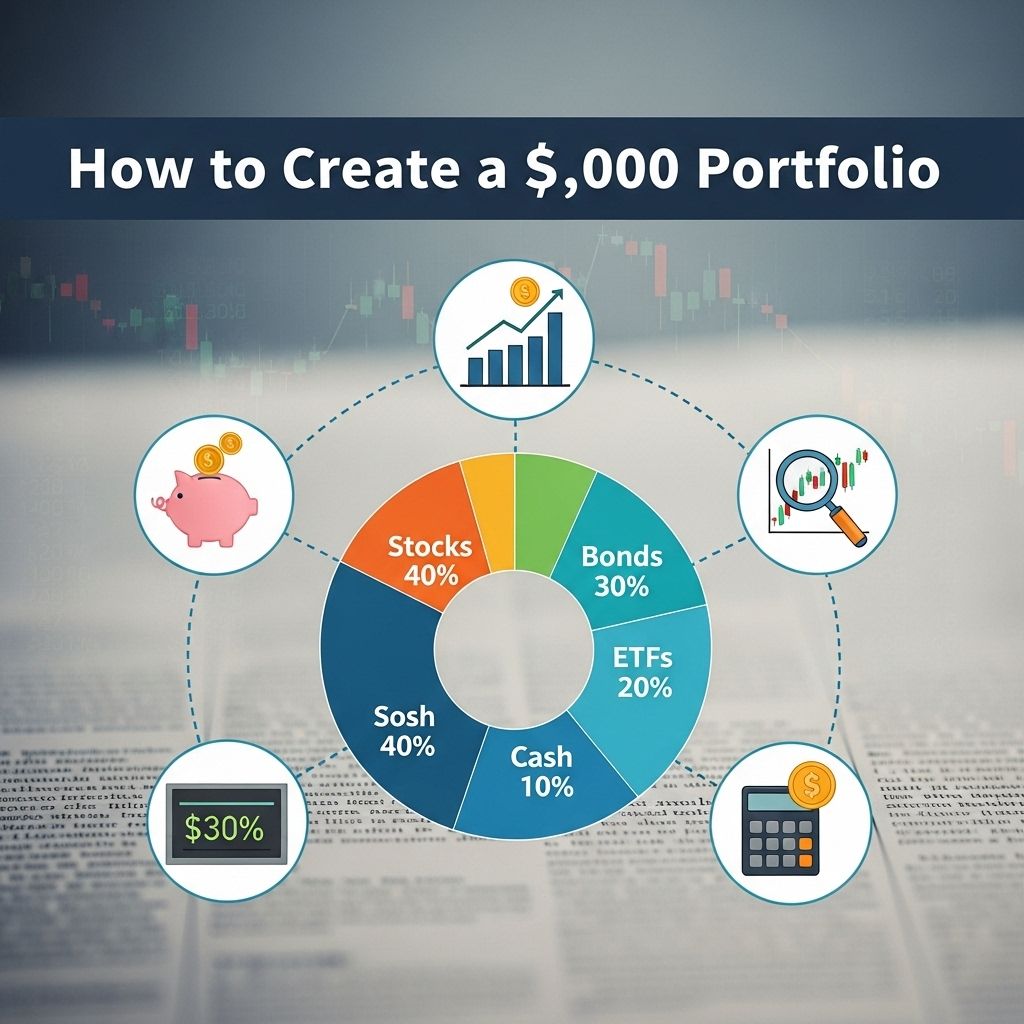
Diversification is a critical strategy to minimize risk while maximizing potential returns. Here’s how you can allocate your $5,000 effectively:
Asset Allocation
A well-balanced portfolio might look like this:
| Asset Class | Percentage | Investment Amount |
|---|---|---|
| Stocks | 60% | $3,000 |
| Bonds | 30% | $1,500 |
| Cash/Cash Equivalents | 10% | $500 |
This table represents a moderately aggressive portfolio. Depending on your risk tolerance, you can adjust the asset allocation accordingly.
Choosing Investments
Once you’ve established your asset allocation, it’s time to pick specific investments. Here are some options for each asset class:
Stocks
- Exchange-Traded Funds (ETFs): Low-cost diversified options like SPDR S&P 500 ETF (SPY) or Vanguard Total Stock Market ETF (VTI).
- Individual Stocks: Consider blue-chip stocks like Apple (AAPL), Microsoft (MSFT), or emerging tech companies.
Bonds
- Government Bonds: U.S. Treasury bonds are a low-risk option.
- Corporate Bonds: Look for investment-grade corporate bonds for higher yields.
Cash/Cash Equivalents
Keep some funds in a high-yield savings account or money market account for liquidity and safety.
Investment Platforms
Choosing the right platform to execute your investment strategy is crucial. Consider the following options:
- Brokerage Accounts: Firms like Fidelity, Charles Schwab, or TD Ameritrade offer robust platforms with no commission trading.
- Robo-Advisors: Services such as Betterment or Wealthfront provide automated portfolio management based on your risk profile.
Regular Contributions and Rebalancing
Building a portfolio isn’t a one-time event. To enhance your investment, consider:
1. Regular Contributions
Set aside a certain amount each month to grow your portfolio over time. Even $100 a month can significantly impact your investment growth.
2. Rebalancing
Review your portfolio periodically (at least annually) to ensure it aligns with your original asset allocation. This may involve selling some assets that have grown significantly and buying others that have lagged.
Staying Informed and Adjusting Strategy
The investment landscape is constantly evolving, so it’s essential to stay informed about market trends, economic indicators, and changes in your own financial situation.
Sources of Information
- Financial News Websites: Bloomberg, CNBC, and Reuters provide up-to-date market news.
- Investment Blogs: Explore blogs like The Motley Fool or Seeking Alpha for insights and analyses.
Conclusion
Creating a $5,000 investment portfolio is entirely feasible with the right approach. By understanding your financial goals, assessing your risk tolerance, and making informed choices about asset allocation and investment selections, you can set yourself on the path to financial growth. Remember to stay disciplined, contribute regularly, and keep your portfolio aligned with your evolving objectives. Invest wisely!
FAQ
What are the first steps to create a $5,000 investment portfolio?
Start by defining your investment goals, risk tolerance, and time horizon. Then, research different asset classes like stocks, bonds, and ETFs to determine how to allocate your funds.
What types of investments should I include in a $5,000 portfolio?
Consider a mix of stocks, bonds, and possibly index funds or ETFs. Diversifying across sectors and asset classes can help manage risk.
How can I minimize risks while investing $5,000?
Diversification is key to minimizing risk. Avoid putting all your money in one stock or asset class and consider including safer investments like bonds.
Is it better to invest in individual stocks or ETFs with a $5,000 portfolio?
ETFs can be a safer option for a $5,000 portfolio as they provide instant diversification and typically have lower fees compared to individual stocks.
What should I do if my $5,000 portfolio loses value?
Stay calm and reassess your investment strategy. Market fluctuations are normal; consider if your long-term goals have changed or if you need to rebalance your portfolio.
How often should I review my $5,000 investment portfolio?
You should review your portfolio at least annually, or after significant life changes. This helps ensure your investments align with your goals and market conditions.