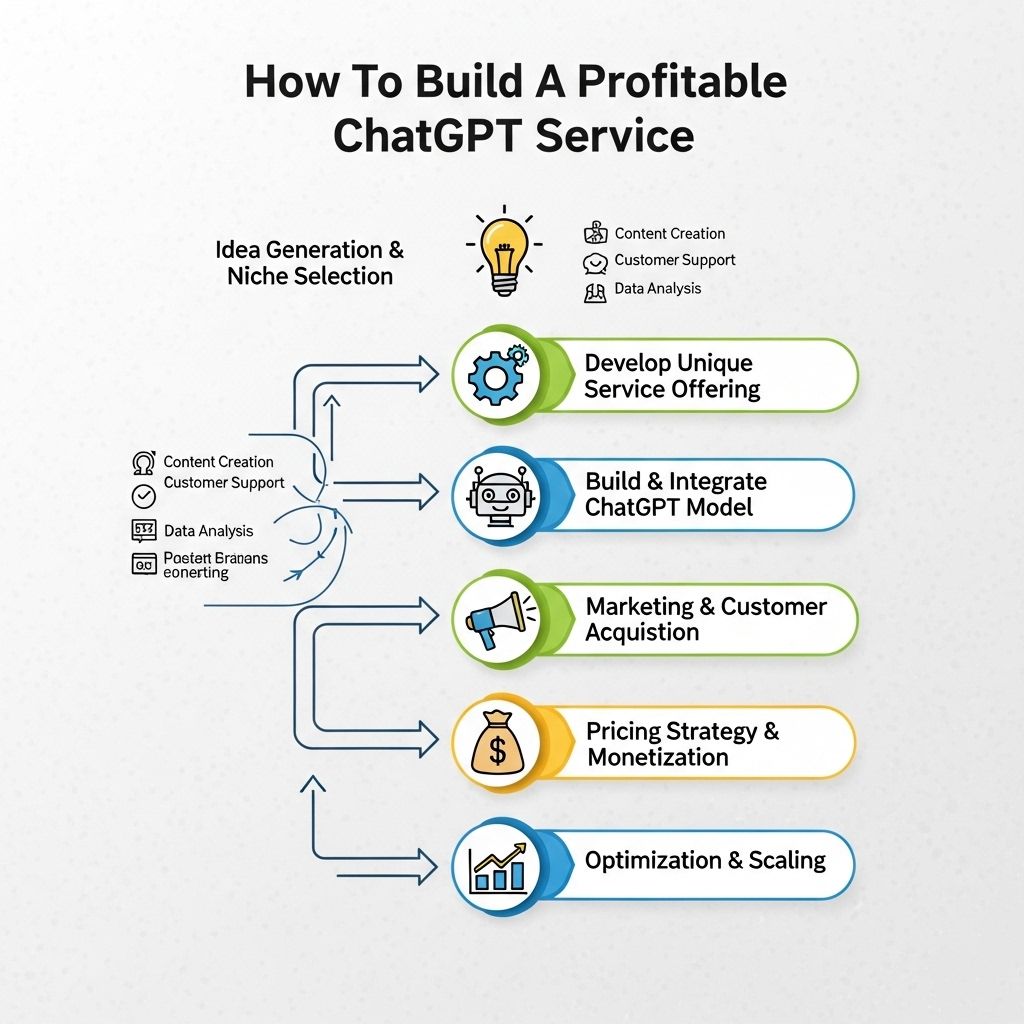
In the era of artificial intelligence, building a profitable ChatGPT service can be an exciting venture. As businesses increasingly adopt AI tools to enhance productivity, customer service, and user engagement, creating a ChatGPT service tailored to specific needs can lead to substantial revenue opportunities. This article explores the essential steps, strategies, and considerations involved in developing a successful ChatGPT-based service.
Building a profitable ChatGPT service can be a transformative venture, especially as demand for AI-driven solutions grows. By following these five straightforward steps, you can establish a successful service that meets client needs while generating revenue. See all available models to explore various approaches to enhance your offering.
Understanding the Market Demand
Before embarking on your ChatGPT service journey, it is crucial to understand the market and identify specific needs that your service can fulfill. Consider the following:
- Industry Focus: Identify industries that are increasingly relying on chatbots and AI interfaces, such as e-commerce, healthcare, finance, and entertainment.
- Common Use Cases: Recognize common applications of ChatGPT, which may include customer support, content generation, language translation, and personalized recommendations.
- Competitive Analysis: Conduct a thorough analysis of existing ChatGPT services to understand their offerings, pricing models, and customer feedback.
Identifying Your Ideal Customer
Once you understand the market demand, the next step is to identify your target audience. Consider factors such as:
- Business Size: Are you targeting small businesses, medium enterprises, or large corporations?
- Budget Constraints: Understand your audience’s budget for AI services, which can influence your pricing strategy.
- Technical Proficiency: Assess the technical abilities of your target customers to offer services that match their knowledge and comfort level.
Choosing the Right Technology Stack
Selecting the appropriate technology stack is critical for building a robust ChatGPT service. Here are some key components:
| Component | Description | Examples |
|---|---|---|
| AI Model | The core model that powers your ChatGPT service. | GPT-3.5, GPT-4 |
| Development Framework | Frameworks to build and deploy chat solutions. | Flask, Django (Python), Node.js |
| Hosting Platform | Where your application will be hosted. | AWS, Google Cloud, Azure |
| Database | Storing user data and interactions. | MongoDB, PostgreSQL |
| Frontend Technologies | Technologies for building user interfaces. | React, Vue.js, Angular |
Integrating APIs for Enhanced Functionality
Integrating external APIs will enhance the capabilities of your ChatGPT service. Some useful APIs include:
- Payment Gateways: Enable transactions within your service (e.g., Stripe, PayPal).
- Analytics Tools: Monitor user interactions and improve service quality (e.g., Google Analytics, Mixpanel).
- Third-Party Services: Integrate with services like CRMs, ERP systems, and social media platforms to expand functionality.
Developing Conversational Flows
Effective conversational design is at the heart of a successful ChatGPT service. Consider the following strategies:
Creating User Personas
User personas help guide the chatbot’s dialogue structure. Define user types and their needs, such as:
- Customer Support Seeker
- Product Inquiry
- Feedback Provider
Designing Conversational Scenarios
Map out various scenarios for interactions, ensuring natural flow and context awareness. Use decision trees to visualize possible conversational paths:
- Greeting the User
- Identifying User Intent
- Offering Solutions or Information
- Gathering Feedback or Closing the Conversation
Implementing a Monetization Strategy
There are several monetization strategies you can adopt for your ChatGPT service:
Subscription Model
Charge users a recurring fee for access to your ChatGPT service. You can offer:
- Tiered subscription plans based on usage limits.
- Premium features for advanced functionalities.
Pay-Per-Use Model
Users pay based on their usage, making it ideal for customers who have fluctuating needs. This model works well for:
- Businesses with seasonal demands.
- Companies wanting to test the service before committing to a subscription.
Marketing Your ChatGPT Service
Once your service is ready, a solid marketing strategy will help you reach potential customers. Key tactics include:
Content Marketing
Develop valuable content that showcases the benefits of your ChatGPT service:
- Blog posts and articles.
- Video tutorials and demos.
- Case studies demonstrating ROI.
Search Engine Optimization (SEO)
Optimize your website to attract organic traffic by focusing on:
- Keyword research related to ChatGPT and AI services.
- On-page SEO techniques.
- Building backlinks from reputable sources.
Social Media Engagement
Leverage social media platforms to create a community around your service. Share insights, engage with users, and promote new features.
Monitoring and Iterating Your Service
After launching your ChatGPT service, continuous improvement is key to profitability:
User Feedback Collection
Regularly gather feedback from users to identify areas of improvement and new feature requests. This can be done through:
- Surveys
- User interviews
- In-app feedback forms
Performance Metrics
Monitor key performance indicators (KPIs) to assess service effectiveness, such as:
| Metric | Description |
|---|---|
| User Engagement Rate | How often users interact with the service. |
| Response Accuracy | Percentage of correct responses provided by the model. |
| Customer Satisfaction Score | Feedback rating from users post-interaction. |
Conclusion
In conclusion, building a profitable ChatGPT service requires a deep understanding of market needs, a well-thought-out technology stack, engaging conversational design, a clear monetization strategy, and effective marketing efforts. By continuously monitoring and iterating your service based on user feedback and performance metrics, you can develop a robust and successful offering in the growing AI landscape.
FAQ
What is a ChatGPT service?
A ChatGPT service utilizes the ChatGPT model to provide automated responses, customer service, content generation, or other interactive features in various applications.
How can I monetize my ChatGPT service?
You can monetize your ChatGPT service through subscription models, one-time fees, advertising, or offering premium features for a fee.
What industries can benefit from a ChatGPT service?
Industries such as e-commerce, healthcare, education, and customer support can greatly benefit from implementing a ChatGPT service to enhance user engagement and streamline processes.
What are some key features to include in a ChatGPT service?
Key features may include natural language processing capabilities, user-friendly interfaces, multi-language support, analytics tools, and integration with existing platforms.
How do I ensure the quality of responses from my ChatGPT service?
You can ensure quality by continuously training the model with relevant data, implementing feedback mechanisms, and regularly updating the system based on user interactions.
What are the technical requirements for building a ChatGPT service?
Building a ChatGPT service typically requires a solid understanding of machine learning, access to the OpenAI API, programming skills, and a hosting solution to deploy the service.