In the vast and ever-evolving landscape of the internet, domain names serve as digital real estate that can significantly impact both businesses and personal brands. The process of buying and flipping domain names has become a compelling venture for tech-savvy entrepreneurs and investors alike. This article will delve into the various strategies, pitfalls, and best practices for successfully navigating the domain flipping market.
In the ever-evolving digital landscape, buying and flipping domain names presents both exciting opportunities and unique challenges. This guide will walk you through essential strategies for identifying valuable domains, assessing market trends, and maximizing your investment potential. For those looking to enhance their online presence, consider immersing yourself in related skills, such as responsive website design tips.
Understanding the Domain Market
Before diving into the buying and flipping process, it’s essential to understand the domain market’s fundamentals. The domain market is characterized by fluctuations in demand, trends, and prices influenced by factors such as:
- SEO Value: Domains containing popular keywords tend to have higher market value.
- Brandability: Short, catchy, and memorable names are often more appealing.
- Extension Popularity: While .com domains are generally preferred, other extensions (like .net, .org, and new gTLDs) can also hold value.
How to Find Profitable Domains
Finding the right domain can be the difference between a successful flip and a failed investment. Here are some strategies to help you identify profitable domains:
1. Use Domain Name Generators
Domain name generators can help spark ideas for potential names. These tools can suggest available domains based on keywords or themes you input. Some popular name generators include:
- NameMesh
- LeanDomainSearch
- Panabee
2. Monitor Expiring Domains
Domains that are about to expire can often be purchased at a lower price. Websites like ExpiredDomains.net offer listings of expiring domains, allowing you to bid on ones that may have existing traffic or SEO value.
3. Check Auctions and Marketplaces
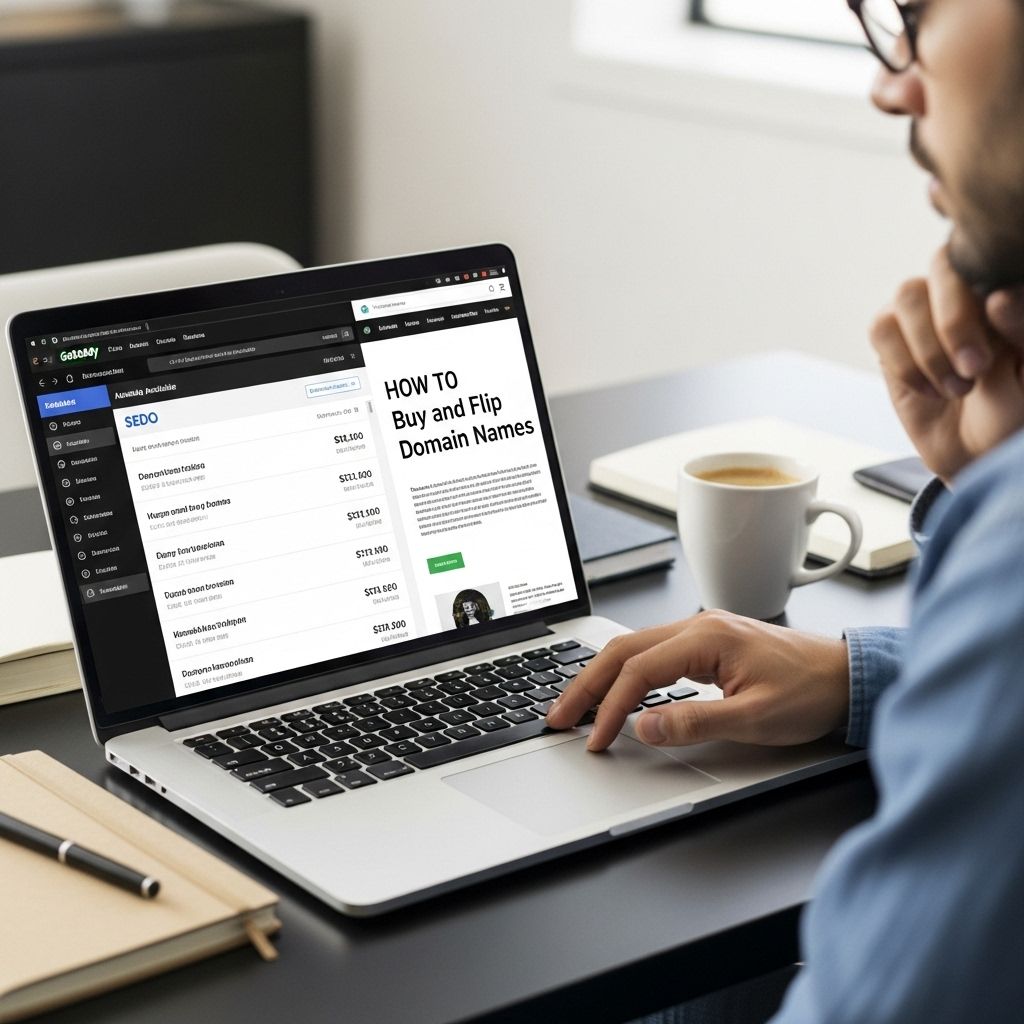
Auction platforms and domain marketplaces, such as GoDaddy, Sedo, and Flippa, provide opportunities to purchase domains directly from other owners or through bidding. Here’s a simplified process:
- Browse listings to identify potential targets.
- Review the domain’s history using tools like Wayback Machine.
- Evaluate its SEO metrics using platforms like Moz or Ahrefs.
The Purchasing Process
Once you’ve identified a domain worth purchasing, follow these steps to ensure a smooth transaction:
1. Conduct Due Diligence
Before making a purchase, conduct thorough research on the domain:
- Check for any existing trademarks.
- Review previous ownership and its online presence.
- Verify its registration status and expiration date.
2. Make the Purchase
You can purchase domains directly from registrars (like Namecheap or GoDaddy) or through an auction. Ensure you understand:
- The registration fee.
- Any renewal costs.
- The domain transfer fee, if applicable.
3. Secure Your Investment
Once the domain is purchased, consider the following:
- Set up a privacy protection plan to keep your information secure.
- Consider a multi-year registration to avoid missing renewal dates.
Flipping Domains for Profit
After acquiring a domain, the next step is flipping it for a profit. Here are effective strategies to enhance your resale value:
1. Improve SEO and Traffic
If your domain has existing traffic, you can enhance its SEO through:
- Creating a simple website with valuable content.
- Implementing on-page SEO techniques.
2. Branding Potential
Highlight the domain’s branding potential by:
- Creating a professional landing page.
- Using social media to promote the domain.
3. List on Multiple Platforms
To reach a wider audience, list your domain on multiple marketplaces and auction sites. Consider platforms like:
- Sedo
- Flippa
- Afternic
Evaluating the Value of Your Domain
Understanding how to evaluate your domain’s worth is crucial for a successful flip. Here are key factors to consider:
| Factor | Impact on Value |
|---|---|
| Length | Shorter domains are typically more valuable. |
| Keywords | Domains with popular keywords can command higher prices. |
| Brandability | Catchy and memorable names appeal to buyers. |
| Extension | .com domains usually have higher resale value. |
Common Mistakes to Avoid
As with any investment, there are common pitfalls to be aware of when flipping domains:
1. Neglecting Research
Failing to conduct thorough research can lead to purchasing a domain with poor potential.
2. Overvaluing a Domain
Be realistic about your expected profits. Overpricing can deter potential buyers.
3. Missed Renewal Dates
Keep track of expiration dates to avoid losing your domain before it can be sold.
Conclusion
Buying and flipping domain names can be a rewarding venture for those willing to invest the time and effort into understanding the market. By using the strategies outlined in this article, you can increase your chances of success and profit in this dynamic digital landscape. Remember to conduct thorough research, evaluate your domains wisely, and approach the flipping process with a strategic mindset. With patience and persistence, you can turn digital real estate into a profitable investment.
FAQ
What is domain flipping?
Domain flipping is the process of buying domain names at a low price and selling them for a profit.
How do I find valuable domain names?
You can find valuable domain names by looking for keywords, trends, and using domain name generators or marketplaces.
What factors affect the value of a domain name?
Factors that affect domain value include length, keyword relevance, extension (.com, .net, etc.), and market demand.
Where can I buy domain names?
You can buy domain names from registrars like GoDaddy, Namecheap, or through domain auction sites.
How do I sell a domain name?
You can sell domain names through online marketplaces, auctions, or by creating a landing page to attract buyers.
What are the risks involved in domain flipping?
Risks include market fluctuations, potential legal issues with trademarks, and the possibility of not finding a buyer.